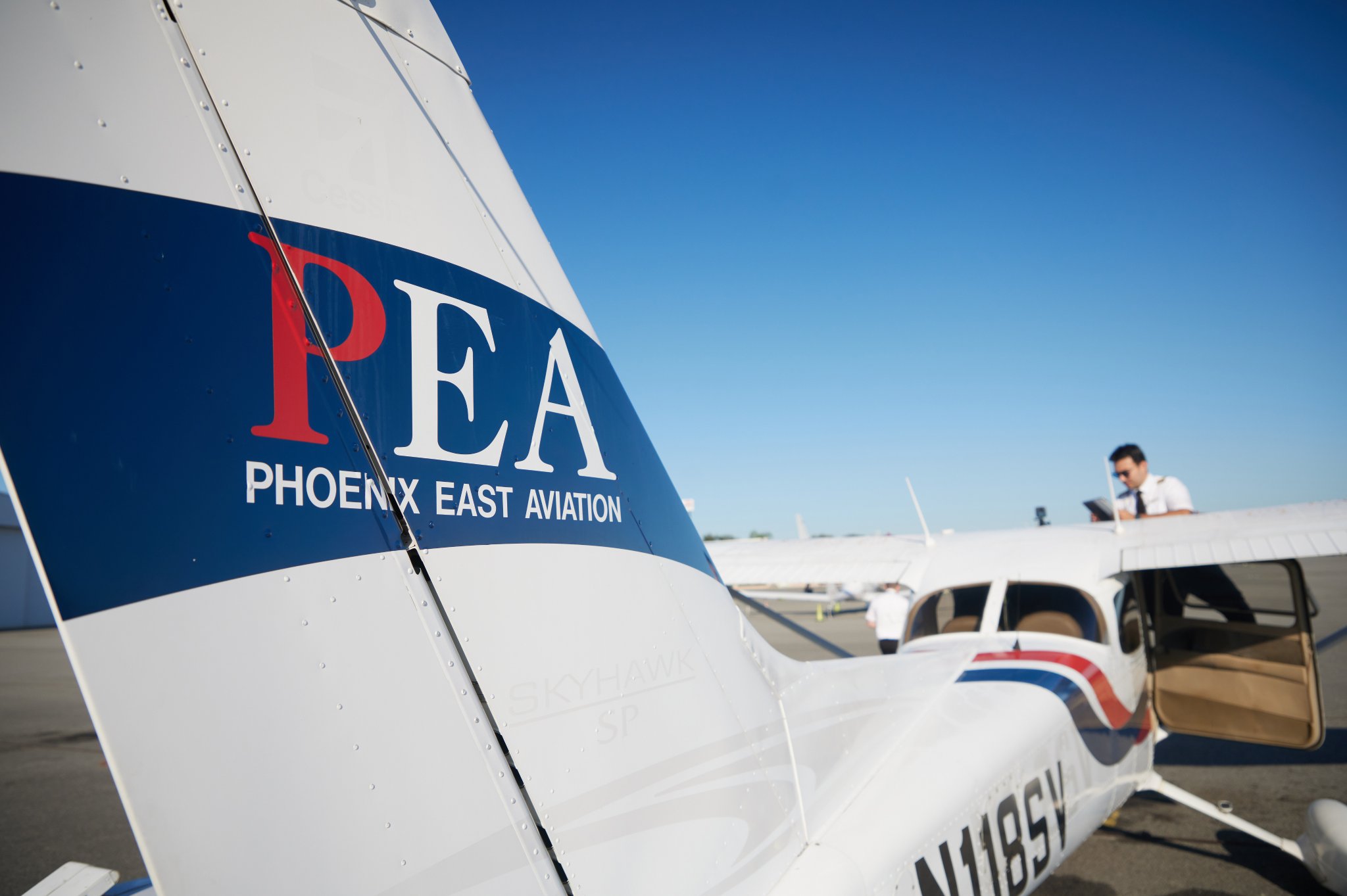
International Flight Student Success at PEA: From Visa to First Officer
The process for international students to become U.S. airline pilots can be complex, but the pathway is well-defined. As one of the leading flight schools in Florida for international students, Phoenix East Aviation is prepared to support you at every stage of the process, equipping you with the information and tools needed to successfully navigate this journey.
In this guide, we’ll deliver step-by-step instructions for pursuing a U.S. airline pilot career. We will cover TSA flight training, the visa application process, professional pilot training, Optional Practical Training (OPT) requirements, flight hours, and airline hiring, helping you determine the next best step for your career.
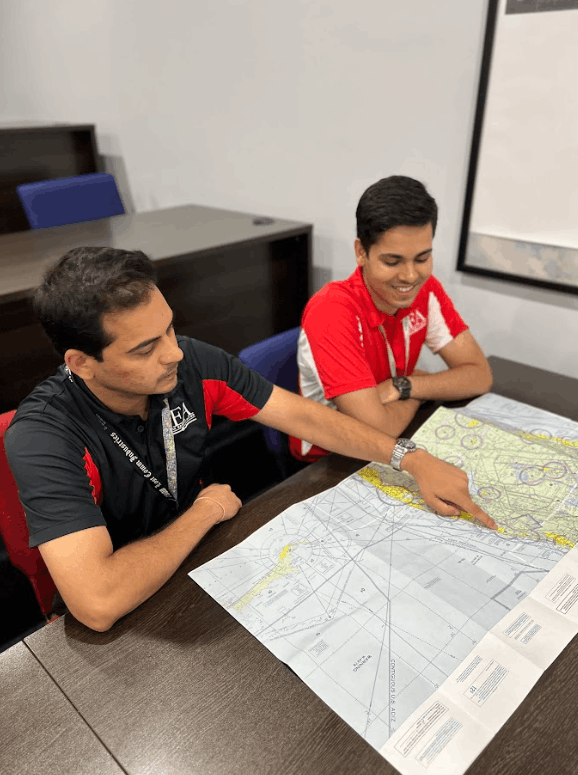
Why Florida Is the Top Destination for International Pilot Training
Learning to fly (and to fly well) requires extensive, consistent training that allows you to build confidence as you master your skills. Weather has a significant impact on flight training, and the idyllic climate in Florida makes it one of the best places for international students to gain the experience needed to begin a U.S. airline pilot career.
Florida is often cited as having more than 300 flyable days every year, thanks to its abundant sunshine, long daylight hours, and predictable weather patterns. Student pilots are able to log consistent hours, which accelerates training and expedites their career goals.
Beyond the favorable weather, Florida is known for its diverse airspace. There are numerous international and domestic airports in the region that are major hubs in the United States, giving students opportunities to manage high-volume air traffic. PEA’s main campus is located in Daytona Beach, and international students who train at that campus fly out of Daytona Beach International Airport, which is hailed as one of the busiest Class C (Charlie) airports.
Throughout their training, students learn to navigate a diverse range of flight experiences, preparing them to become confident and assured pilots.
Step One: TSA Flight Training Security Program Clearance
Before international students can begin their flight training, they must meet all federal requirements for non-U.S. citizens and non-permanent residents. The Department of Homeland Security relies on the Flight Training Security Program (FTSP) to verify that non-U.S. citizens and non-U.S. nationals enrolled in flight training programs do not pose a threat to national security. All U.S.-based flight training providers are required to confirm that international students have received a Determination of Eligibility from the TSA.
International candidates have to complete the registration process through the FTSP website. Expect to provide personal information, address history, your passport and visa details, information about the school you plan to attend, and the type of flight training you are considering.
Recognizing the need for support, PEA guides students through this registration process. This early action is critical due to processing timelines.
The F-1 Visa Application Process
International students must apply for an F-1 visa, which is a non-immigrant visa that allows students to enter the country to study full-time at SEVP-approved facilities.
To begin the F-1 visa application process, you must receive the Department of Homeland Security’s Form I-20. This critical document is issued by PEA after you have been admitted, and it is used at the U.S. Embassy to verify that you are eligible to complete your flight training in the United States.
Once you have received the I-20 form, you can proceed with your visa application, including completing the DS-160 form. The form takes about 90 minutes to complete; once it has been submitted, you will be eligible to schedule your U.S. embassy interview. Visa applicants are responsible for bringing all required documents to the interview, which include:
- Appointment letter
- Passport
- Photographs
- DS-160 confirmation page
- Original supporting documents
Visa issuance timelines vary by embassy, though students are generally advised to apply well in advance. Applying early helps streamline the process and can prevent delays in starting your flight training.
Note that PEA may require additional documents for international students, including:
- F-1 visa application
- Passport
- Diploma
- Proof of funds
- Sponsor documents if applicable
Training: PEA’s Professional Programs
PEA offers two professional flight training programs that are F-1-eligible pathways. Our professional programs cover all ratings needed for airline employment and OPT instruction. Designed to be efficient and provide comprehensive training, both Professional Program I and Professional Program III are excellent options for international students who want to prepare for a career as a U.S. airline pilot.
Professional Program I
Professional Program I is a 130-hour program that provides foundational ratings required to begin building experience toward airline eligibility. It was intentionally created as an efficient pathway for aspiring pilots to begin accumulating flight hours toward minimum requirements. Students earn the following ratings throughout this training program:
- Instrument
- Commercial
- Multi-Engine add-on
- Certified Flight Instructor
Graduates are qualified to provide flight instruction in single-engine aircraft. By offering a rigorous combination of hands-on maneuver-based and scenario-based training, this program supports the development of fundamental flying skills and aeronautical decision-making skills.
Professional Program III
Building on the foundation developed in Professional Program I, Professional Program III focuses on additional training conducted in a multi-engine aircraft. This 139-hour program allows students to obtain the following ratings:
- Instrument
- Single-Engine Commercial
- Multi-Engine Commercial
- Certified Flight Instructor
- Certified Flight Instructor Instrument
- Multi-Engine Instructor Licenses and Ratings
Graduates are qualified to provide flight instruction in both single- and multi-engine aircraft. Students can opt between the standard and accelerated tracks for this program, which allows them to access a fleet of more than 70 aircraft. A Private Pilot License is a prerequisite for Professional Program III.
OPT: Building Hours as a Paid CFI
Optional Practical Training (OPT) is available to F-1 visa students through U.S. Citizenship and Immigration Services (USCIS), giving international students the opportunity to pursue temporary employment directly related to their area of study. Students who are eligible for OPT can apply through USCIS for up to 12 months of employment authorization after completing their flight training.
OPT provides international students with an opportunity to earn income while building hours, making this a more financially feasible pathway. The other alternative is self-funding additional flight time, which can be both costly and time-consuming. The FAA requires pilots to complete at least 1,500 total flight hours to earn their Airline Transport Pilot certificate. Graduates who complete an FAA-approved Part 141 program may be eligible for a Restricted Airline Transport Pilot certificate with reduced hours.
PEA alumna Mahfrin Wadia’s story highlights the advantage of these innovative pathways. Wadia moved from Dubai to the United States at age 18 with one dream in mind: to become an airline pilot. She relied on the mentorship of PEA faculty to complete her training and work as a flight instructor while accumulating over 1,500 hours. By leveraging the support of PEA and taking advantage of OPT, she was able to become a United Airlines 737 First Officer.
Airline Hiring and Career Pathways
The assistance that you receive at PEA as an international student doesn’t end when your training is completed. We provide holistic support to ensure students have access to professional opportunities. PEA hosts on-campus recruiting events with regional airlines, private operators, and cargo carriers, helping graduates extend their professional network and learn about pilot roles in the area. In addition, we provide resume workshops with aviation career firms, helping students position themselves for success.
As an Aviate-participating flight school, PEA provides students with access to the United Airlines pilot career development program. PEA graduates can apply to Aviate; if accepted, they receive a conditional pathway toward employment as a United First Officer. They also benefit from United pilot coaching and mentorship, travel privileges, and more.
International students interested in returning home after completing their flight training benefit from PEA’s DGCA and EASA conversion partnerships. PEA is here to assist all students with their personal goals.
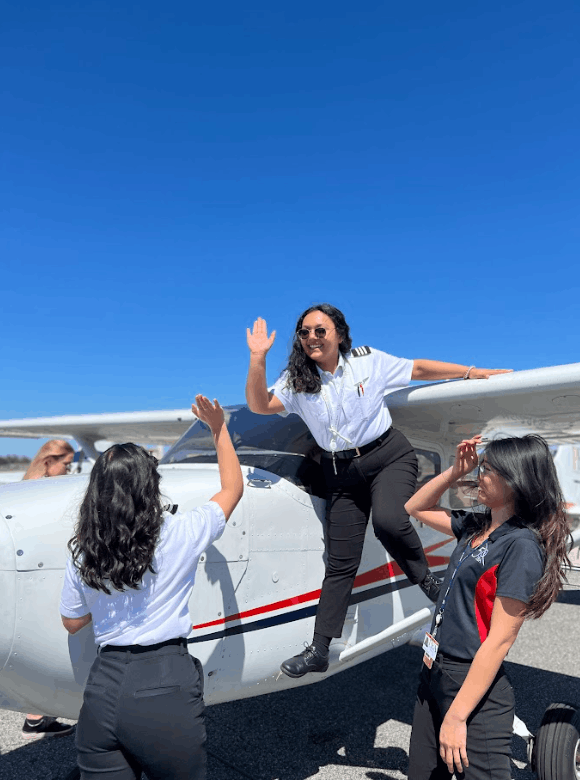
The PEA Difference for International Students
For over 50 years, PEA has been providing exceptional pilot training programs for both domestic and international students. PEA is an ACCET-accredited, FAA Part 141 school, as well as one of four F-1 authorized flight schools in the country. We are uniquely prepared to provide international students with the comprehensive support needed to begin a career as a U.S. airline pilot. By combining F-1 visa status with OPT, your U.S. airline career can become financially achievable.
Request more information about international student admissions at PEA, and apply to one of the top flight schools in Florida for international students.
Sources
https://pea.com/admissions/international-students/
https://pea.com/courses/professional-programs/professional-program-i/
https://pea.com/courses/professional-programs/professional-program-iii/
https://pea.com/blog/aviation-in-florida-and-weather/
https://pea.com/career-pathways/
https://www.fts.tsa.dhs.gov/home
https://www.fts.tsa.dhs.gov/home/candidateregistration
https://studyinthestates.dhs.gov/students/prepare/students-and-the-form-i-20
https://ceac.state.gov/genniv/
https://www.ecfr.gov/current/title-14/chapter-I/subchapter-D/part-61/subpart-G