What’s in a Pilot’s Flight Bag?
Ever wonder what’s in that bag that pilots carry? Why do they need so much stuff? And why do some pilots seem to get away with just a cup of coffee, while others carry a large, heavy bag?
The truth is that pilots aren’t actually required to carry much with them on board an airplane. But a good pilot, and especially a good student, will always be prepared. This is why you’ll see some pilots – usually the most experienced pilots – carrying just a clipboard, while students or trainees will be carrying piles of books and various other things with them.
Most of the time, the things a pilot carries with him are just personal belongings and perhaps study material. But if you look inside of a any pilot’s flight bag, you’re likely to see the following items:
- Books: Students and pilots in training are always carrying books and manuals around with them. Student pilots have a variety of books that they reference, like the FAR/AIM, the aircraft’s pilot operating handbook (POH) and other various pilot training manuals. In today’s digital age, many of these can be accessed as e-books, but often it’s just easier to have the actual book with you.
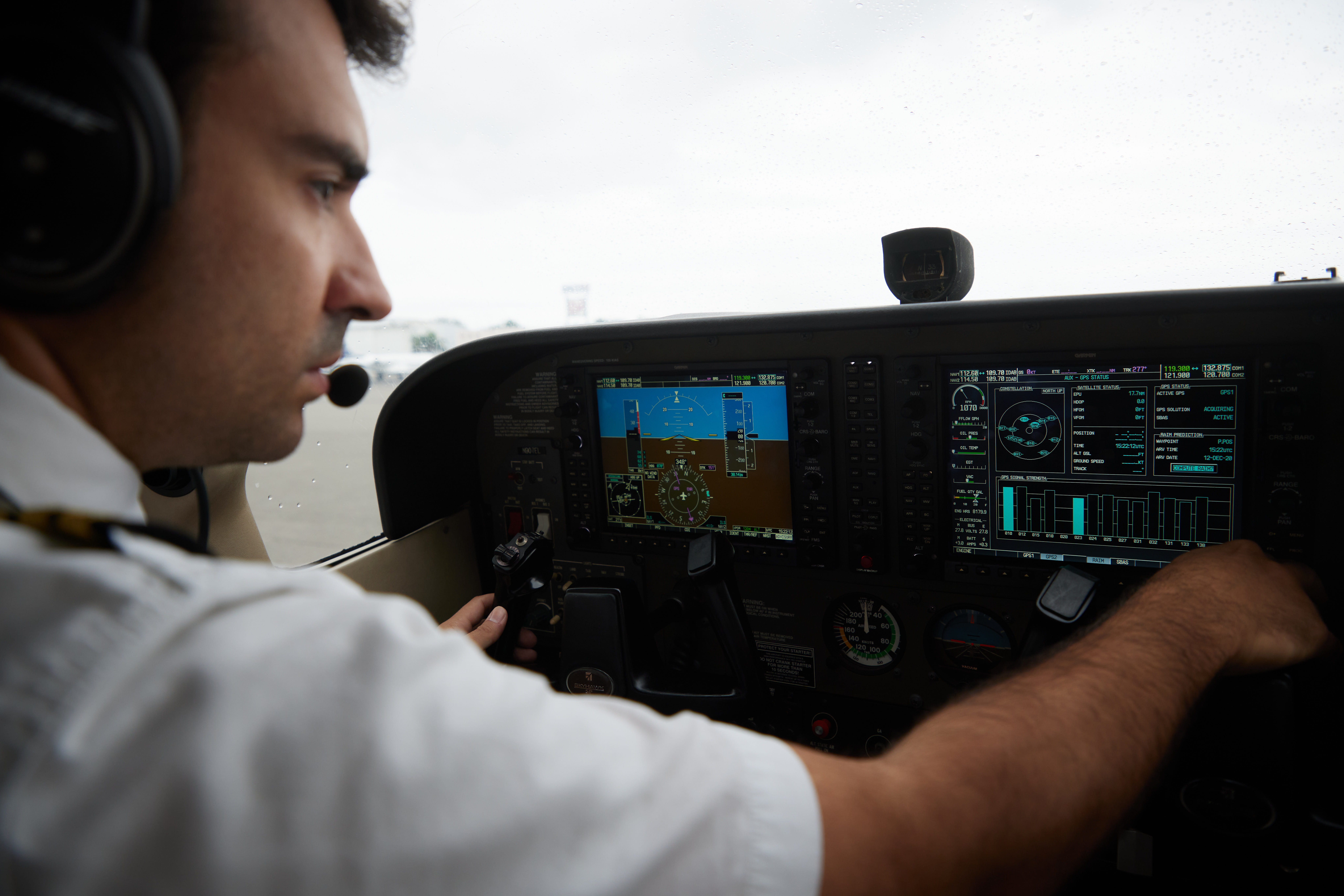
- iPad or Tablet: In today’s cockpits, it’s more and more common to have electronic flight bags in place of paper charts and manuals. In addition, there are many great applications that assist with flight planning, situational awareness and weather services.
- External GPS: A Stratus or a Bad Elf GPS receiver works nicely with those iPad apps, and can display your aircraft position on a moving map display, so, naturally, pilots love them.
- Headset: Hearing protection and comfort in the cockpit is necessary. Every pilot carries their headset with them, unless it’s already in the airplane.
- Sunglasses and sunscreen: Pilots don’t fly without them. Even if it’s cloudy on the ground, instrument pilots sometimes fly above the cloud layer and in the sun. For this reason, it’s important that pilots use sunscreen, too.
- GoPro: Some pilots carry video equipment like a GoPro or Garmin VIRB camera, which can be mounted internally or externally, or both, to record the flight. You’ve seen these recording on YouTube.
- Kneeboard: Cockpit management is a real thing, and its’ something that, when done poorly, can leave a pilot feeling flustered and out of control. t’s helpful to have a kneeboard on your lap to keep things organized. Kneeboards often have a notepad, a place to hold a tablet and a pen or pencil, and pockets for your flight computer phone, chart and checklists.
- Charts: Some pilots rely solely on electronic charts, but many still carry paper charts with them in case the iPad battery fails. It’s important to have these charts available, as they offer important terrain, airspace and airport information.
- Checklists: Every airplane has checklists, and there’s a good chance you’ll find a few inside of a pilot’s flight bag.
- Flashlight: Necessary for night flight.
- Flight computer (E6B or electronic flight computer): These days, it’s unlikely that a pilot will actually use an old-school E6B to do computations during a flight, but you never know when your GPS will fail, so it’s always good to have a backup.
- Plotter: It’s also unlikely that a pilot will get out t a plotter (used to calculate course and distance) while in flight, but it’s a necessary flight planning tool when you don’t have access to computerized planning applications.
- Pens/Pencils: Pilots need to write down air traffic control instructions, clearances, and weather information, among other things, and they should always have a pencil or two handy.
- Logbooks, personal documents: Pilots are not required to carry their logbooks with them on flight (there’s an exception for student pilots) but many people do.
- Granola Bar: Snacks are important. Sometimes what you plan to be a short flight turns into a day-long adventure, so it’s always wise to have a snack or two in your flight bag.
After all of that, there are really only a few things that pilots are required to carry with them, and they include: a pilot certificate, photo identification and, when necessary, an aviation medical certificate. The rest is optional, but useful.