Traits of a Successful Commercial Pilot
Successful commercial pilots possess a high level of technical skills, such as understanding how an aircraft works and how to operate it. Flying also requires exceptional cognitive skills like being able to think quickly and being able to learn and retain information.
Theoretically, a pilot could know everything there is to know about an aircraft and how to operate it and may be successful with those technical skills alone. However, it is crucial for pilots to have non-technical characteristics, such as personality traits to utilize their full potential.
While personality varies for each individual, and there is no “right” personality for pilots, it’s worth noting that there are certain traits that are common for successful pilots.
Key Takeaways
- The traits of a successful commercial pilot extend beyond technical knowledge. Strong decision-making, situational awareness, emotional stability and communication are just as important as learning to fly an aircraft.
- Many of the personality traits pilots rely on can be developed through structured training, practice and experience. Confidence and sound judgment come from repeated exposure to real-world flying scenarios.
- What traits do pilots need? Qualities such as conscientiousness, adaptability, curiosity, and the ability to remain calm under pressure can all contribute to long-term success.
- Research by Breuer and Ortner suggests that non-technical skills and personality characteristics can influence pilot performance alongside technical ability. Developing both areas helps pilots manage routine operations as well as unexpected situations.
- Strong commercial pilot traits include effective communication, teamwork, attention to detail and the ability to make thoughtful decisions even when conditions change quickly.
- There is no single personality type that guarantees success. Instead, what makes a good pilot is a combination of technical proficiency, professionalism, and a commitment to continuous learning.
Measuring Success
Before examining the traits of a successful pilot, it is important to establish an operational definition of “success” in the context of flying.
Success might mean different things to different people. One person might measure success as bettering themselves each day, while another might think of success as the ability to achieve goals or complete a challenging task. Success is subjective and relative to each individual, which is why commercial pilots need to figure out what it means for them.
Pilots might think of success as:
- Reaching a destination
- Providing passengers with a safe flight
- Achieving a new rating, such as going from a private rating to an instrument rating
- Earning stripes
- Finding fulfillment in their career and confidence in their abilities
- Meeting other pilots and becoming a part of the aviation community
This may vary for each commercial pilot depending on whether they fly passengers, transport cargo, or any other kind of role.
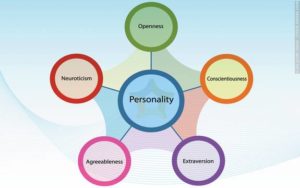
Waude,A.2017.Five-Factor Model of Personality.Psychologist World.psychologistworld.com
Five-Factor Model of Personality
The Five-Factor Model of Personality (FFM) is commonly used to gain a broad sense of an individual’s personality using five core “OCEAN” traits:
- Openness to Experience (O)
- Conscientiousness (C)
- Extraversion (E)
- Agreeableness (A)
- Neuroticism (N)
OCEAN is typically measured through a pentagonal chart, with lines extending outward as a representation of the degree to which an individual displays each of the five traits. These lines generate a unique shape that is different depending on the individual. The OCEAN model is easy to understand and is approachable for those looking to learn more about their personality.
For the first trait of OCEAN, commercial pilots with a high sense of openness are more likely to be curious, ambitious, and excited to embark on new opportunities. This could include traveling to new destinations and taking different flight routes. Additionally, these individuals are more open-minded and willing to accept and understand individuals with differing backgrounds and beliefs. Commercial pilots who fly passengers, especially internationally, will need to be able to interact with all kinds of people.
Second, if a pilot is conscientious, then they are motivated to perform their duties to the best of their ability. Conscientious individuals tend to value hard work and are detail-oriented, and pilots exhibiting this quality are less prone to accidents.
Extraversion, the third trait of OCEAN, represents an individual’s preferences for working and interacting with other people. Some favor working alone, which is known as introversion. However, they are not mutually exclusive, since most individuals tend to have a mixture of both. Commercial pilots constantly interact with others, whether they are passengers, captains, or ground control. This requires effective communication and a willingness to be a team player. Even if a pilot has introverted tendencies, they must be able to outwardly express some level of extraversion when necessary.
Agreeableness is the fourth aspect of OCEAN and represents an individual’s ability to relate to and cooperate with others. Commercial pilots must be able to receive orders from their captains if they are not the pilot in command.
Lastly, neuroticism reflects a person’s temperament and how well they respond to pressure and emotionally taxing situations. Individuals with high neuroticism tend to be anxious in stressful situations and less likely to act well under pressure. Pilots should generally have a lower level of neuroticism in order to be adaptable to handle tough, unexpected situations.
Myers-Briggs Type Indicator
The Myers-Briggs Type Indicator (MBTI) is an older model, and it is where the common term “personality type” originates from. Most personality tests are based on this model, and there are several free websites for taking a “Myers-Briggs” Personality Test.

Simkus, J.2024.Myers-Briggs Type Indicator 16 Personality Types.Photo.Simply Psychology.simplypsychology.org
The MBTI is based on a four-letter system in which each “letter” of an individual’s personality represents one of their traits. For example, one person might have an ENFJ personality type, which represents an individual who is extraverted, intuitive, feeling, and judging. More information on what these terms mean can be found on the 16 Personalities website.
Analysts of the MBTI have grouped each career into a personality type, which includes pilots. According to these analysts, commercial pilots closely resemble the ESTJ personality type, which stands for extraverted, sensing, thinking, and judging.
Since the OCEAN model overlaps with the MBTI, the same characteristics of extraversion apply, while MBTI uses similar concepts but different terms. Individuals that reflect an ESTJ personality type are referred to as “Executives” who are organized, structured leaders with a sense of right and wrong.
With these traits in mind, commercial pilots can begin to take a closer look at themselves to see if they have the characteristics to be successful in their careers.
Traits Airlines Actually Screen For
While personality models such as OCEAN and the Myers-Briggs Type Indicator can help individuals better understand themselves, flight schools and airlines typically focus on observable behaviors and operational performance. During training and evaluations, instructors look for pilot competencies that support safe, consistent decision-making on the flight deck rather than a specific personality type.
The table below outlines several of the key commercial pilot skills instructors evaluate during training.
| Competency | Why It Matters |
|---|---|
| Situational awareness | Helps pilots recognize changing conditions, monitor aircraft systems and anticipate potential hazards. |
| Decision-making | Supports timely, well-reasoned choices during routine operations and unexpected situations. |
| Communication | Ensures clear coordination with crew members, air traffic control and passengers when appropriate. |
| Workload management | Helps pilots prioritize tasks and maintain focus during busy phases of flight. |
| Professionalism | Demonstrates preparation, discipline, accountability and adherence to procedures. |
| Adaptability | Allows pilots to adjust to changing weather, operational demands and other unforeseen circumstances. |
| Teamwork | Supports effective collaboration with captains, first officers, dispatchers and ground personnel. |
CFI Perspective: “Students often ask us what makes a good pilot, but the answer goes beyond personality. The strongest pilots consistently prepare well, communicate clearly, stay calm under pressure and continue improving throughout their careers.”
Begin Your Training at Phoenix East Aviation
The traits that define a successful commercial pilot (conscientiousness, emotional stability, decisiveness, and situational awareness) are built through training, not born overnight. At Phoenix East Aviation, our professional flight training programs are designed to develop exactly these qualities through structured, scenario-based instruction alongside experienced flight instructors.
If you’re ready to take the next step, get in touch or apply for admission to get started.
Frequently Asked Questions
Can anyone learn the traits of a successful pilot, or are they innate?
Many traits of a successful commercial pilot can be strengthened through education and experience. While some people naturally excel in areas like communication or organization, qualities such as situational awareness, decision-making and confidence are developed through consistent training and practice.
Do introverts make good pilots?
Yes. Successful pilots have a wide range of personalities, and introversion does not prevent someone from succeeding in aviation. What matters most is the ability to communicate effectively, work as part of a crew and perform well in operational environments.
What is the most important personality trait for a commercial pilot?
There is no single trait that guarantees success, but conscientiousness is often considered one of the most valuable pilot personality traits. Pilots who are detail-oriented, disciplined and committed to following procedures help promote safe and consistent flight operations.
How does flight training develop pilot personality traits?
Structured flight training gives students repeated opportunities to practice decision-making, communication, workload management and problem-solving. In a Part 141 program like Phoenix East Aviation’s, students receive consistent instruction and instructor feedback that helps build these professional habits over time.
Do airlines test for personality before hiring?
Airlines generally evaluate candidates using interviews, simulator assessments and other hiring methods that measure professionalism, communication, judgment and other commercial pilot skills. Rather than looking for one personality type, employers focus on whether applicants demonstrate the competencies needed to operate safely and work effectively as part of a flight crew.
References:
tasks%20during%20their%20respective%20assignments