IFR Rating: Requirements, What It Is, & How It’s Used
If you’ve spent any time researching what it takes to become a professional pilot, you’ve probably encountered the term “IFR rating” or “instrument rating.” For aspiring pilots, this certification represents a crucial milestone—one that transforms you from a fair-weather flyer into a pilot capable of operating in nearly any conditions.
What Does IFR Stand For?
IFR stands for Instrument Flight Rules. In aviation, there are two primary sets of rules that govern how aircraft operate: Visual Flight Rules (VFR) and Instrument Flight Rules (IFR). These aren’t just guidelines—they’re regulatory frameworks established by the Federal Aviation Administration that determine when, where, and how you can fly.
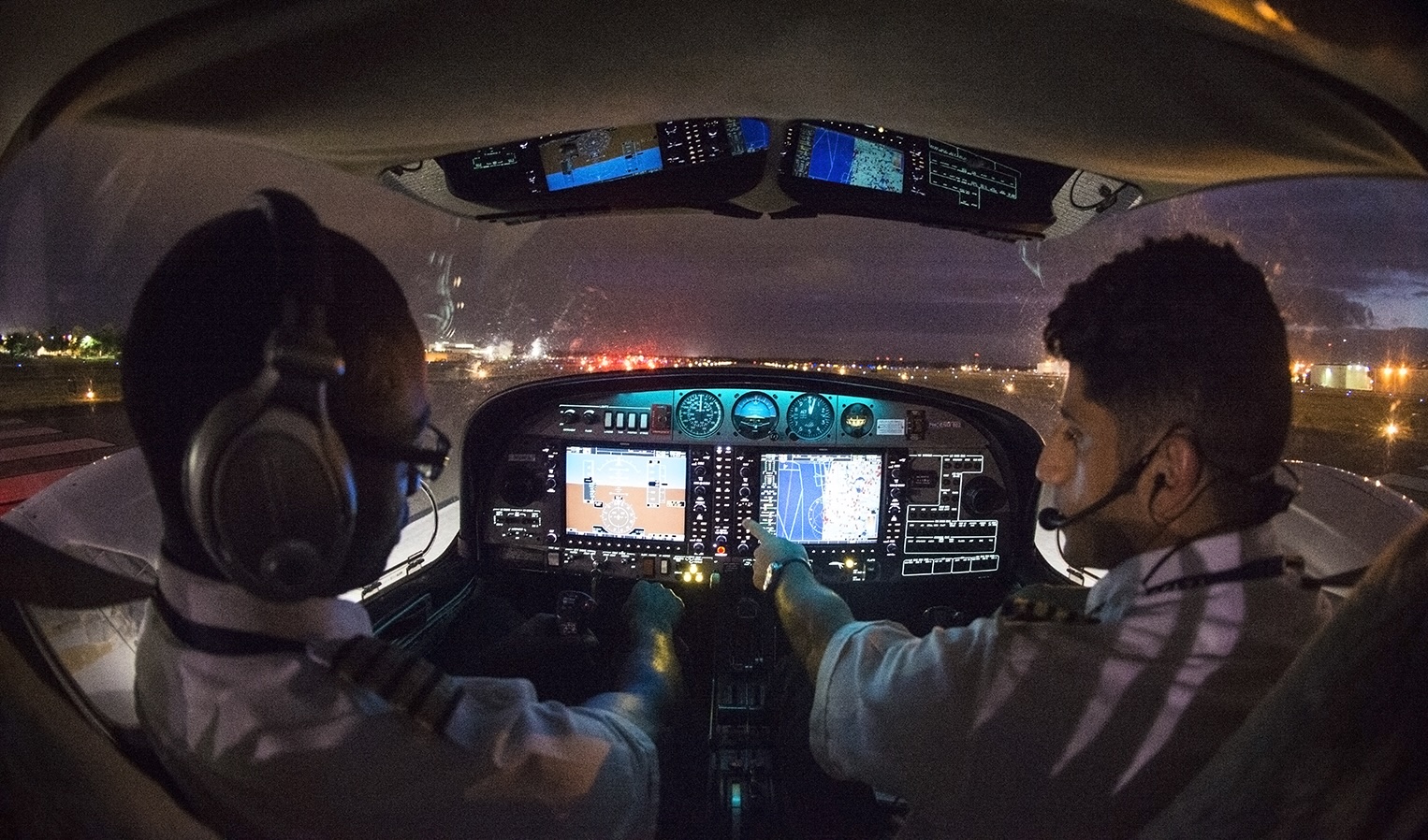
Instrument Flight Rules allow pilots to fly using the aircraft’s instruments as the primary reference, rather than outside visual cues. When you’re flying IFR, you’re navigating using instruments like the attitude indicator, heading indicator, altimeter, and navigation systems. Air traffic control provides separation from other aircraft and guides you along specific routes and altitudes. IFR operations allow flight in conditions where visual references are limited or nonexistent—such as inside clouds, in fog, or at night when ground references are difficult to distinguish.
The distinction between VFR and IFR isn’t just about weather conditions. IFR represents a more structured, controlled environment where pilots must follow clearances from air traffic control, fly specific routes and altitudes, and maintain constant communication with controllers. This system enables the safe, efficient flow of air traffic even when pilots can’t see each other or the ground.
What Is an IFR Rating?
An IFR rating—more commonly called an instrument rating—is an additional certification that qualifies you to fly under Instrument Flight Rules. It’s not a separate pilot license but rather an enhancement to your existing Private Pilot License or Commercial Pilot License that expands your privileges and capabilities.
The instrument rating teaches you to trust your instruments completely and to develop the mental discipline to ignore misleading physical sensations. You’ll learn to scan instruments efficiently, extracting the information you need while maintaining precise control of the aircraft. You’ll master approaches that guide you down through clouds to a safe landing at airports you can’t see until the final moments. You’ll learn to interpret complex weather information and make sound decisions about whether conditions are safe for flight.
Beyond the technical flying skills, instrument training develops your ability to manage high workload situations. Flying IFR means monitoring multiple radios, following air traffic control instructions, navigating along specific routes, managing aircraft systems, and maintaining precise control—all simultaneously. This multitasking ability is essential for professional pilots and is why the instrument rating is considered one of the most challenging and valuable certifications you’ll earn.
IFR Rating Requirements
The Federal Aviation Administration has established specific requirements you must meet before earning your instrument rating. Understanding these prerequisites helps you plan your training timeline.
The eligibility requirements start with holding at least a Private Pilot License with an airplane category rating. You cannot earn an instrument rating until you’ve already earned your PPL, as the instrument rating builds on foundational piloting skills. You must also hold at least a third-class medical certificate, though if you’re pursuing a professional career, you’ll likely already have a second-class or first-class medical. Additionally, you must be able to read, speak, write, and understand English, as aviation communications worldwide are conducted in English.
The aeronautical experience requirements are substantial. You must log at least 50 hours of cross-country flight time as pilot in command, with each cross-country flight covering a straight-line distance of at least 50 nautical miles from the original departure point. This requirement ensures you have experience with navigation and flight planning before tackling instrument procedures.
The heart of instrument training is the 40 hours of actual or simulated instrument time required. This includes time spent flying solely by reference to instruments, either in actual instrument meteorological conditions (inside clouds or reduced visibility) or under simulated conditions using a view-limiting device that blocks outside visual references. Of these 40 hours, at least 15 hours must be with a certified flight instructor who specializes in instrument instruction.
Your training must include specific tasks and experiences. You’ll need to complete one cross-country flight of at least 250 nautical miles under IFR, following airways or air traffic control routing. This flight must include instrument approaches at each airport and involve three different kinds of approaches using navigation systems. You’ll also log three hours of instrument flight training within the two months preceding your practical test, ensuring your skills are sharp for the checkride.
Ground training is equally important. You must receive and log ground training from an authorized instructor or complete a home-study course covering topics like federal aviation regulations relevant to IFR operations, appropriate use of flight information publications, procurement and use of aviation weather reports and forecasts, safe and efficient operation of aircraft under instrument flight rules, and recognition of critical weather situations and windshear avoidance.
Before you can take your instrument rating practical test, you must pass the FAA Instrument Rating Knowledge Test. This computer-based exam consists of 60 questions covering all aspects of instrument flight, including regulations, weather theory, instrument procedures, navigation, and aeronautical decision-making. You need a score of at least 70% to pass, though most well-prepared students score significantly higher.
The final requirement is passing the practical test—the checkride—with an FAA designated pilot examiner. This evaluation consists of an oral examination where you’ll demonstrate your knowledge of instrument procedures, regulations, and decision-making, followed by a flight test where you’ll perform various instrument procedures, approaches, and emergency scenarios. The examiner is evaluating not just your ability to fly the aircraft on instruments, but your judgment, decision-making, and overall readiness to exercise instrument privileges safely.
Earn Your IFR Rating with Confidence
At structured flight schools like Phoenix East Aviation, instrument training is carefully integrated into your overall pilot training program. The curriculum is designed to build your skills progressively, ensuring you meet all requirements while developing the proficiency and confidence needed for safe IFR operations. PEA’s experienced certified flight instructors guide students through the challenging transition from visual to instrument flight, using modern aircraft equipped with advanced avionics that prepare you for the technology you’ll use in your professional career.