Guide to a Student’s First Solo Flight
A student pilot’s first solo flight is more than just a milestone – it’s a defining moment.
It marks the transition from guided instruction to independent command, building the confidence and skills essential for every pilot’s journey.
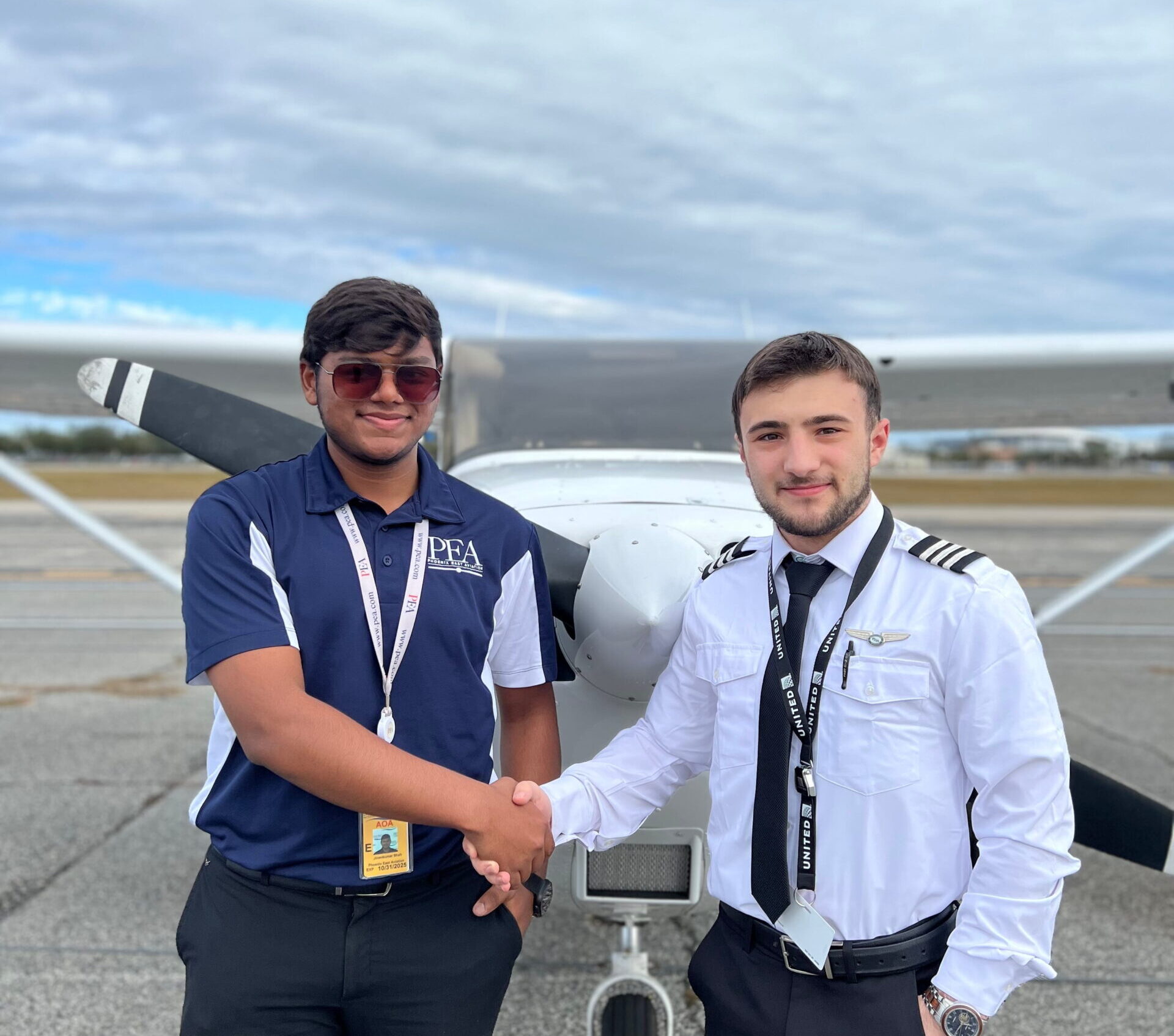
At Phoenix East Aviation, we ensure our students are not only ready for this step but fully prepared to soar. Every solo is a celebration of dedication, progress, and the passion for flight.
Key Takeaways
- Student pilots must carry required documents on solo day, including a student pilot certificate, medical certificate, government-issued photo ID, and instructor endorsements.
- There is no FAA minimum flight hour requirement for a first solo flight; a flight instructor determines when a student is ready.
- A student’s first solo flight typically consists of three takeoffs and landings completed in the airport traffic pattern under instructor supervision from the ground.
- Solo endorsements are specific to the make and model of aircraft being flown and must match the aircraft used for the solo flight.
- Preparation through consistent training, emergency procedure review, and strong communication skills helps students approach their first solo with confidence.
What Does a Student Pilot Need to Fly Solo?
Before flying solo, a student pilot must obtain a student pilot certificate, a solo endorsement from their flight instructor, and meet all FAA requirements for solo flights. These include demonstrating proficiency in takeoffs, landings, navigation, and emergency procedures. Additionally, a student pilot must have a valid medical certificate also issued by the FAA.
It is important to note that endorsements from a flight instructor must be for the make and model of aircraft used during the student’s solo flight. This means that endorsements should be made for each make and model of aircraft, as required by the FAA, that is used when taking more than one solo flight.
FAA Requirements
The first step toward preparing for a solo flight is understanding the FAR requirements as outlined in Part 61.87. According to the FAR, a student must be knowledgeable on solo requirements (Part 61.87), the general operating and flight rules (Part 91), and have logged training in several necessary maneuvers. While there is no set timeframe or number of flight hours required, an instructor will determine when a student is proficient enough to fly alone.
The FAA also has specific guidelines that students must meet before flying solo, including:
- A minimum age of 16 for powered aircraft (14 for gliders and balloons)
- The ability to read, speak, write, and understand English
- Passing a pre-solo written exam covering airspace, procedures, and regulations
- Receiving an instructor’s endorsement verifying readiness for solo flight
While a flight instructor endorsement is required by the FAA to take a solo flight as a student pilot, a separate endorsement is needed to make a solo cross-country flight.
 How to Prepare for a First Solo Flight
Preparation is key to ensuring a smooth and successful solo flight. Students should focus on the following:
Reviewing checklists and emergency procedures
- Practicing consistent landings and takeoffs
- Familiarizing themselves with the airport environment
- Maintaining clear communication with air traffic control (ATC)
Flying solo as a student is a major step towards your career as a pilot. While this can heighten both nerves and excitement, PEA ensures that students are well-prepared long before leaving the ground. Before taking a first solo flight, students take extensive courses as part of the Part 141 or Part 61 curriculum. A student may only take their first solo flight once their instructor provides a formal endorsement, ensuring it’s done safely within PEA’s structured training environment.
How to Mentally and Physically Prepare for Your First Solo
A first solo flight is exciting, but it also requires focus, preparation, and good judgment. Along with flight training, students should take time to prepare mentally and physically before solo day.
Mental Preparation and Confidence
Many students find it helpful to visualize the flight the night before, including taxi procedures, radio calls, takeoffs, and landings. Reviewing checklists and normal procedures can also help reduce uncertainty. While nerves are normal, students should trust the training and instructor guidance that led to the solo endorsement. Maintaining checklist discipline throughout the flight helps keep each task organized and manageable.
Physical Readiness Before the Flight
Students should aim for seven to eight hours of sleep before a first solo flight to support focus and decision-making. Eating a light meal and staying hydrated can also help maintain steady energy levels in the cockpit. Excessive caffeine should be avoided, as it can increase nervousness and make it harder to stay calm during the flight.
Knowing When to Go Around
A go-around is one of the most important safety decisions a student pilot can make during a solo flight. If a landing approach feels unstable, rushed, or uncomfortable on final approach, the safest choice is to discontinue the landing and try again. Student pilots are trained to prioritize safety over forcing an approach to work.
Common First Solo Mistakes to Avoid
Even well-prepared students can make small mistakes during a first solo flight, especially when nerves and excitement are involved. Some tips to keep in mind include:
- Fly a slightly wider traffic pattern if needed to avoid feeling rushed during takeoff, downwind, and final approach. Giving yourself extra time can help maintain better spacing and decision-making.
- Stay ahead of radio communications by thinking through calls before key phases of flight. Clear, calm communication becomes easier when students avoid trying to multitask at the last second.
- Slow down during preflight procedures and trust the checklist instead of relying on memory alone. Taking a methodical approach helps students catch small details before they become distractions in the air.
- During landing, focus on making smooth, controlled corrections instead of reacting aggressively to every movement. Small adjustments during the flare typically lead to more stable landings.
- Commit to the go-around early if an approach does not feel stable or comfortable on final. Choosing to go around is a sign of good judgment and safe aeronautical decision-making.
What to Bring on Solo Day
Before arriving at the airport, student pilots should make sure they have all required documents and equipment ready for their first solo flight. Students should bring:
- Student pilot certificate
- Logbook with the required solo endorsement for the specific make and model of aircraft
- Government-issued photo ID
- Valid third-class medical certificate
- Headset
- Kneeboard or notepad with traffic pattern altitudes and radio frequencies written out
Having important frequencies and pattern information written down can help reduce mental workload and make cockpit tasks feel more manageable during the flight.
How Many Hours of Flight Training Are Required Before First Solo?
There is no fixed number of training hours required before a first solo flight, as readiness varies from student to student. However, most students complete their solo flight between 10-30 hours of logged flight time. Flight instructors assess a student’s skills, confidence, and decision-making ability before granting solo clearance.
What Happens During a Student’s Solo Flight?
When a student pilot has completed all requirements and their instructor has approved them for a solo flight, they are now ready to “fly solo.” A first solo flight typically consists of a few takeoffs and landings in the airport traffic pattern. The student’s instructor will supervise from the ground while the student completes a series of circuits, demonstrating safe and controlled maneuvers.
Flying solo is both an exciting endeavor and an important opportunity for learning. A newfound sense of independence will allow a student to get a feel for what it will be like without relying on an instructor, which is something they will have to do once they have obtained their pilot’s license. Instructors might also feel a sense of accomplishment by getting to see what their students have learned and how far they have come.
Tips for a Successful First Solo Flight
PEA ensures that students are well-prepared for their first solo flight. But, there are also some tips that can help a student feel their best about flying solo:
- Trust Your Training: Rely on the skills and knowledge you’ve developed during your instruction.
- Stay Calm: Maintain composure to make sound decisions during the flight.
- Follow Checklists: Adhere to pre-flight, in-flight, and post-flight checklists to ensure safety and procedural compliance.
- Communicate Clearly: Keep communications with air traffic control (ATC) clear and concise.
- Reflect and Learn: After the flight, discuss your experience with your instructor to identify strengths and areas for improvement.
With extensive ground flight training under their belt, students are well-equipped to take to the skies. Following the above tips and preparing through the required training courses puts students in the best position for this big milestone.
Start Your Journey Toward Solo Flight at PEA
Your first solo flight doesn’t happen by accident, it happens because you put in the work, trusted the process, and trained with instructors who knew when you were ready. At Phoenix East Aviation, that structured path is built into everything we do, from our Part 141 curriculum to our experienced flight instructor team.
Whether you’re just starting to explore what a career in aviation looks like or you’re ready to take the first concrete step, PEA’s admissions team is here to walk you through the process. Explore our flight training programs and find out why students from across the U.S. and around the world choose PEA as the place where their aviation journey begins.
Frequently Asked Questions
How Many Flight Hours Before My First Solo?
There is no FAA-required minimum number of flight hours before a student pilot can complete a first solo flight. Instead, a flight instructor determines readiness based on skill level, consistency, and decision-making ability. Most students solo between 10 and 30 hours of logged flight time, but the exact timing varies from person to person. The focus is on proficiency and safety rather than reaching a specific hour threshold.
Can I Solo at a Towered Airport?
Yes, student pilots can complete solo flights at towered airports if they have been properly trained and endorsed by their instructor. In these environments, students communicate directly with air traffic control (ATC) while operating in the traffic pattern. Many students train at towered airports throughout their flight education, which helps build confidence with radio communications and airport procedures early on.
Do I Need a Separate Endorsement for Solo Cross-Country Flights?
Yes, a separate endorsement is required for solo cross-country flights. While an instructor’s initial solo endorsement allows a student to fly solo in the local training area, additional endorsements are needed before flying beyond those limits. Cross-country endorsements verify that the student has received the required planning, navigation, and procedural training for that specific flight.
What Happens if I Feel Unsafe During My Solo?
If something feels unsafe during a solo flight, the safest decision is to slow down, follow procedures, and avoid forcing the situation. Student pilots are trained to perform a go-around if an approach becomes unstable or uncomfortable during landing. In some situations, a student may also return for a full stop landing and speak with their instructor before continuing. Good aeronautical decision-making is always more important than completing every planned maneuver.