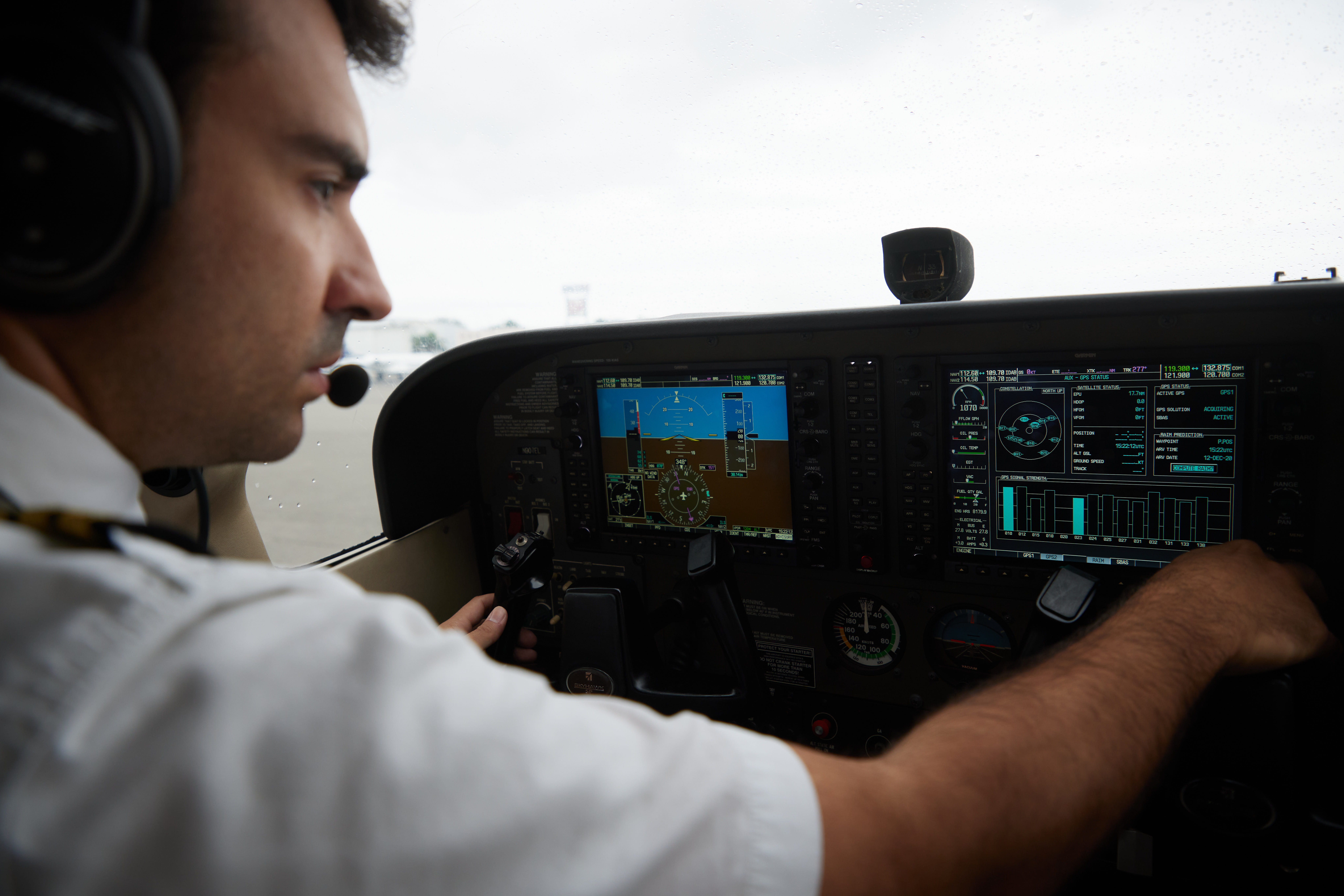
The Global Pilot Shortage in 2026: What the Numbers Mean for Your Career

Considering a career as a commercial pilot? With the global pilot shortage showing no signs of easing anytime soon, now could be a great time to get the ball rolling. Below, we’ll take a closer look at what’s behind the commercial pilot shortage and what it means for pilots entering training today.
The Numbers Behind the Shortage
The global pilot shortage is highlighted across numerous sources. According to data from the Bureau of Labor Statistics (BLS), the demand for airline and commercial pilots is projected to grow 4% between 2024 and 2034, with an estimated 18,200 job openings each year. Boeing’s “Pilot and Technician Outlook” for 2025-2044 mirrors these statistics, projecting that 660,000 new pilots will be needed globally over the next two decades.
Meanwhile, a National Air Carrier Association (NACA) report maintains that pilot scarcity will affect travel options over the next decade, with a cumulative shortage of more than 28,000 pilots by 2030 (based on current trends).
What Is Driving the Shortage?
Despite the fact that commercial pilots often report a high level of job satisfaction, there just aren’t enough of them to go around, for a number of reasons.
Mandatory Retirements
Many commercial airline pilots are reaching mandatory retirement age, which will inevitably lead to a major gap in the aviation workforce.
Under the Federal Aviation Administration (FAA) 14 CFR Part 121, commercial airline pilots are not permitted to fly after they reach the age of 65. There are no true exceptions to this rule, aside from seeking employment with a company that is not a Part 121 carrier or taking on a flight engineer role. As a result, it is estimated that more than 15,000 pilots are forced into retirement each year, further compounding the issue of pilot supply and demand.
The Pandemic’s Lingering Effect
Another factor contributing to the global pilot shortage is the lingering impact of the COVID-19 pandemic. During the peak of pandemic-related shutdowns and a sharp decline in non-essential travel, many airlines attempted to mitigate their losses by encouraging senior pilots to take early retirements. Some carriers even offered early retirement incentives, which accelerated the departure of pilots in their late fifties and early sixties.
Reduced Military Pipeline
Historically, the military provided a steady pipeline of airline pilots, with military pilots transitioning into civilian roles as commercial pilots after serving. However, the military has also been affected by the global pilot shortage, leading to retention incentives designed to compete with commercial carriers and retain skilled pilots. In turn, this has placed more pressure on civilian flight training programs to meet the rising pilot hiring outlook.
Surging Travel Demand
The pilot shortage might not be as noticeable if it weren’t for the steady increase in travel demand. Data from the International Air Transport Association (IATA) highlights a 3.8% year-over-year increase in total passenger demand as of January 2026. As travel demand grows, so does the pressure on airlines to expand capacity, increase flight availability, and maintain reliable operations.
A Global Picture, With Regional Nuances
This pilot shortage isn’t just affecting air travel in the United States; it’s impacting the entire globe:
- In North America, mandatory retirements within legacy carriers are expected to be a major problem in the coming years. Consequently, airlines are embarking on massive recruiting initiatives, with United Airlines alone announcing plans to hire approximately 2,500 new pilots in 2026 (near-record hiring levels).
- In Europe, compensation growth for airline pilots now reaches between 8% and 12% year-over-year, reflecting the industry’s growing need to hire and retain qualified pilots. According to Boeing’s projections, European carriers will need 122,000 new pilots by 2041.
- In the Asia-Pacific, CAE projects the greatest need for new pilots, with an estimated 101,000 needed in the region over the next decade. This is consistent with IATA’s reported 4.4% year-on-year increase in demand among Asia-Pacific airlines serving international passenger markets.
What This Means for Pilots Entering Training Today
Perhaps more than ever, the airline seniority system remains a cornerstone of many commercial airline pilot careers. Most major carriers offer clear benefits to pilots with seniority, ranging from preferred schedules to higher pay. That said, with the retirement wave affecting much of the industry, now could be a great time for aspiring pilots to enter the field.
According to Boeing, “long-term demand for newly qualified personnel remains strong,” and aspiring pilots training today may be well-positioned to thrive in the field as they graduate. Specifically, pilots who complete flight school training and build hours within the next two to three years could enter a hiring environment built in their favor.

The Rise of Airline Pathway Programs
What’s the industry doing to mitigate the global pilot shortage and fill hiring gaps? One major initiative has been the rise of formal airline pipeline program options across the globe. Also referred to as cadet program options, these are structured career tracks designed to take aspiring pilots from their initial training to direct job opportunities in the field. Many of these setups with flight schools connect students directly to regional airline hiring affiliates and major airlines, providing a much-needed supply of qualified pilots to help close the gap. For many airlines, pipeline programs have become the preferred method of recruiting and hiring.
PEA’s Career Pathways Program
At Phoenix East Aviation (PEA), we’re excited to offer our students a secure hiring route directly to United Airlines through the Aviate program. As soon as you earn your pilot’s license, you can apply to the program and receive a conditional job offer (CJO). From there, you’ll receive dedicated coaching from a current United pilot, travel privileges, and more.
In addition to our available pipeline program, students at PEA enjoy numerous on-campus events and networking opportunities. These include monthly campus visits from regional and national carriers, private jet operators, and cargo airlines, as well as dedicated resume workshops developed in partnership with resources like JSFirm.
Ready to Take Flight With PEA?
The global pilot shortage is structural and long-lasting, not a short-cycle trend with an easy solution. Compounded by issues like mandatory retirements and increased demand for airline travel, the shortage has underscored the need for flight schools and pipeline programs.
In the coming years, the pilots who are likely to benefit most from the aviation career outlook are those who begin training now, building hours, and engaging with structured airline pathways.
Ready to take the next step toward your career as a commercial airline pilot? PEA offers professional programs to suit your needs, including options to obtain your Certified Flight Instructor, Certified Flight Instructor Instrument, Multi-Engine Instructor License, and more. All students also have access to dedicated career pathways and other resources to help their careers take flight.
Get in touch to request more information or get the ball rolling on your application for admission today.
Sources
https://pea.com/career-pathways/
https://pea.com/courses/professional-programs/
https://pea.com/admissions/u-s-students/#admission-form
https://www.bls.gov/ooh/transportation-and-material-moving/airline-and-commercial-pilots.htm
https://www.cae.com/2025-aviation-talent-forecast/
https://www.iata.org/en/pressroom/2026-releases/2026-03-02-02/
https://naca.aero/wp-content/uploads/2023/07/Pilots_Scarcity.pdf
https://www.faa.gov/faq/what-maximum-age-pilot-can-fly-airplane
https://www.saveourskiesalliance.org/pilot-shortage.html
https://www.iata.org/en/pressroom/2026-releases/2026-03-02-02/