Airspace 201: The Air Traffic Control System
Despite the large volume of air traffic in the skies over the U.S. at any given moment, our nation’s air traffic control system keeps air travel safe for approximately 2 million travelers each day.
Many people know that the skies around airports are controlled via control towers at the local level, but who controls aircraft beyond the local airports? Here’s a look at the different types of control towers and the role they play in aviation, including which controllers a pilot might communicate with during a flight.
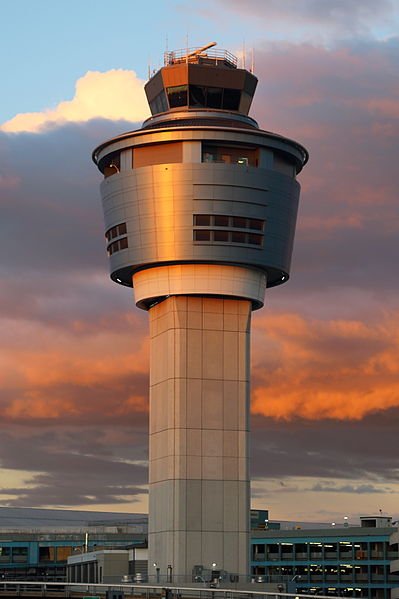
For the purpose of air traffic control, the FAA divides its areas of control among different regions or sectors. Each sector is controlled by an ARTCC, which stands for Air Route Traffic Control Center. When speaking on the radio, pilots refer to the ARTCC as “Center” with the name of the region preceding it (for example, “Miami Center”).
An aircraft flying on a flight plan through a particular region will communicate with that particular region’s ARTCC before being “handed-off” to another facility, usually TRACON.
Terminal Radar Approach Control, or TRACON, is known to pilots as “approach.” There are TRACON facilities at every major airport, and a pilot might communicate with a TRACON facility even if they don’t plan to land at that particular airport, but are flying in that general area. TRACON controllers help the pilot transition from the enroute phase of flight to the approach and arrival phase.
Once an aircraft gets closer to the airport of intended landing, TRACON will have the pilots switch to the local control tower (ATCT) frequency for clearance to land.
Once the airplane has landed, they often communicate with a separate ground controller and then, many airplanes have to communicate with their own company’s operations control center while taxiing and parking.
There’s also a departure control used in the same way approach control is used. Shortly after an aircraft departs a busy airport, the local control tower will ask the pilot to switch to a departure frequency – another way that air traffic controllers keep track of aircraft in an organized manner.
While these controllers will often be physically located in the same control tower, their duties might be very different. Regardless of the type of controller or area that they control, one thing is for sure: Air traffic controllers do an amazing job of managing the flow of traffic from one airport to the next, keeping air travel efficient and safe for everyone.