
Blog

Why Is Pilot Training in the U.S. is Attractive Worldwide?

Thousands of students come to the USA each year from around the world for pilot training. It is significantly less expensive to train in the US for European students, especially if they are career-oriented and wish to develop the skills and earn the certifications to fly for an airline. Some countries do not even have flight schools that offer the certifications that airlines require, such as a Commercial Pilot License and even the more advanced Airline Transport Pilot Certification.

Another reason students find the U.S. attractive for pilot training is the weather; in some areas of the US, such as all of  Florida and parts of California, the weather allows daily flying year-round (yes, DAILY flying and YEAR-ROUND), which means the student can complete his or her training considerably faster – saving money and obtaining a flying job more quickly. In addition to the faster training, overall prices in the US for the same training are typically as much as 50% less as one might get in the UK or Europe.
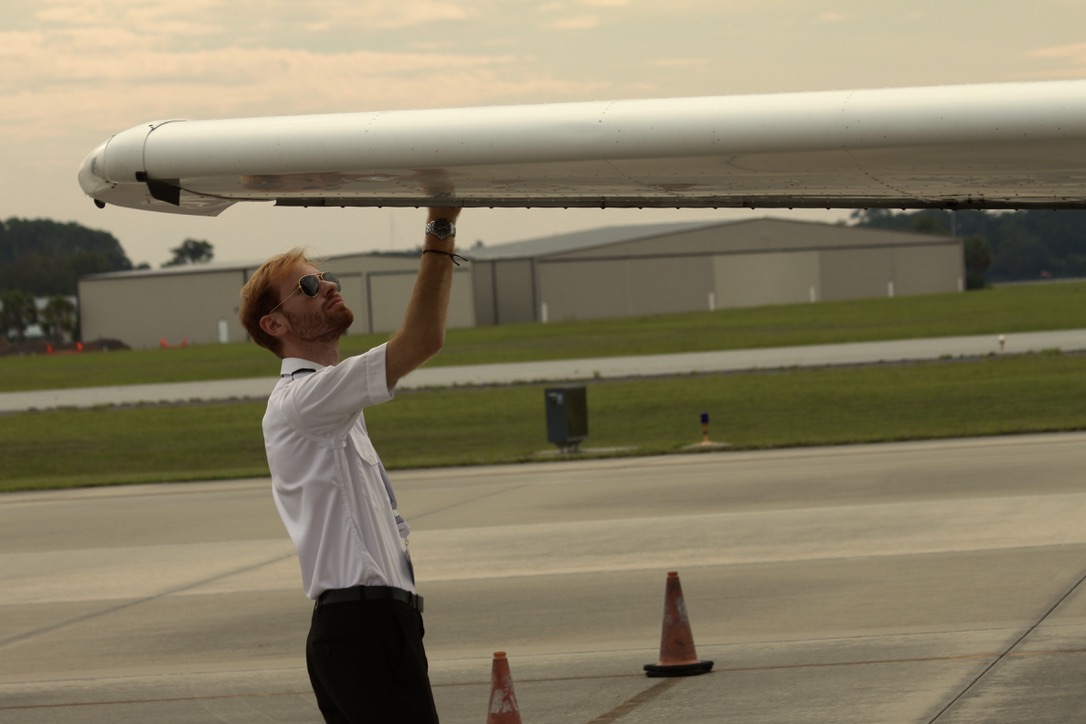

At Phoenix East Aviation, for example, students from over 100 different countries have come to train to be airline pilots. Learn mroe at www.pea.com.


Read More Posts Like This

Cessna Wing shot overlooking Daytona Beach coastline during the day
Blog Living in Daytona Beach as an International Flight Student: What to Expect

Your aviation journey is a chance to step into a career spanning continents. Of course, you need to find the right flight school and location. With year-round flying weather and a thriving aviation community, a flight school in Daytona Beach, Florida, offers an optimal base...

Blog Understanding Aviation Weather Reports: METARs and TAFs Explained for Student Pilots

Weather is one of the most important factors affecting flight safety and is a leading cause of training delays and flight cancellations. Meteorological Aerodrome Reports (METARs) and Terminal Aerodrome Forecasts (TAFs) form the foundation of aviation weather reports, which means it’s crucial that student pilots...

Close up shot of PEA Cessna 172 Tail. Blue stripe with red P in PEA
Blog Standard Track vs. Accelerated Pilot Training: Which Program Pace Is Right for You?

Becoming a pilot involves extensive flight school training, with both standard track and accelerated programs to consider. While both pathways lead to the same professional credentials, the accelerated program provides a condensed training pathway that may help you achieve your training goals faster. Individual training...