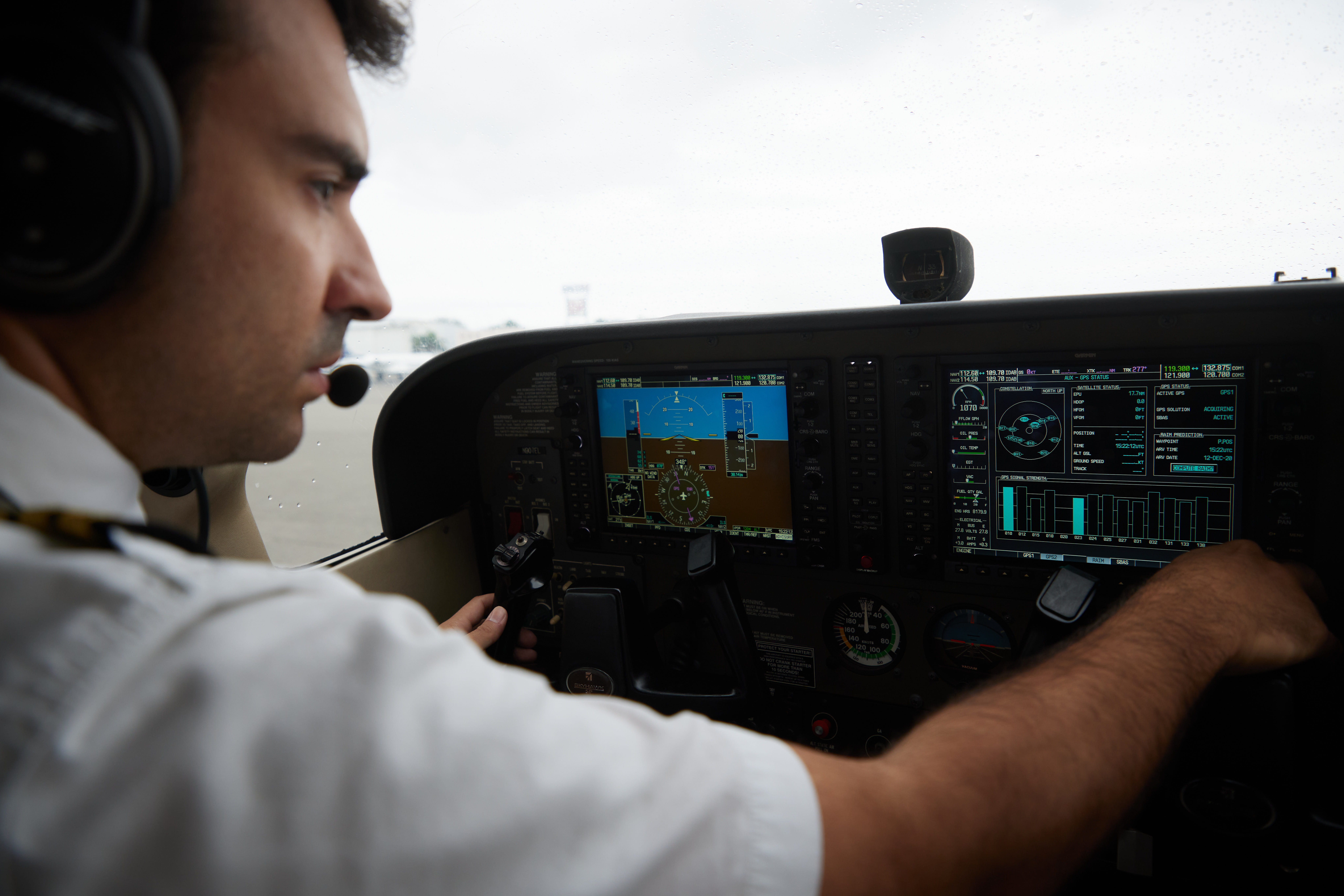
What’s a Glass Cockpit?
You may be familiar with the term ‘glass cockpit’, but what is a glass cockpit? And what does that mean for today’s flight training?
Today’s factory-built aircraft come equipped with glass cockpits, which is a fancy name for the advanced technology found on board aircraft. This technology, once reserved for only the most advanced jets, is now available, and even commonplace, for light aircraft. If you haven’t flown an aircraft with a glass cockpit, you will likely find yourself in one very soon.
So what makes a cockpit glass? The term “glass cockpit” generally refers to an LCD display that replaces the conventional “six-pack” of flight instruments in an aircraft. It’s a term given to any aircraft in which the primary instruments are located within a single primary flight display (PFD) or Multi-Function Display (MFD) that looks like a computer screen – a large, flat, glass-panel display. PFDs and MFDs have the capability to display all of the traditional instruments along with lots of additional data such as engine data, checklists, weather and traffic displays.
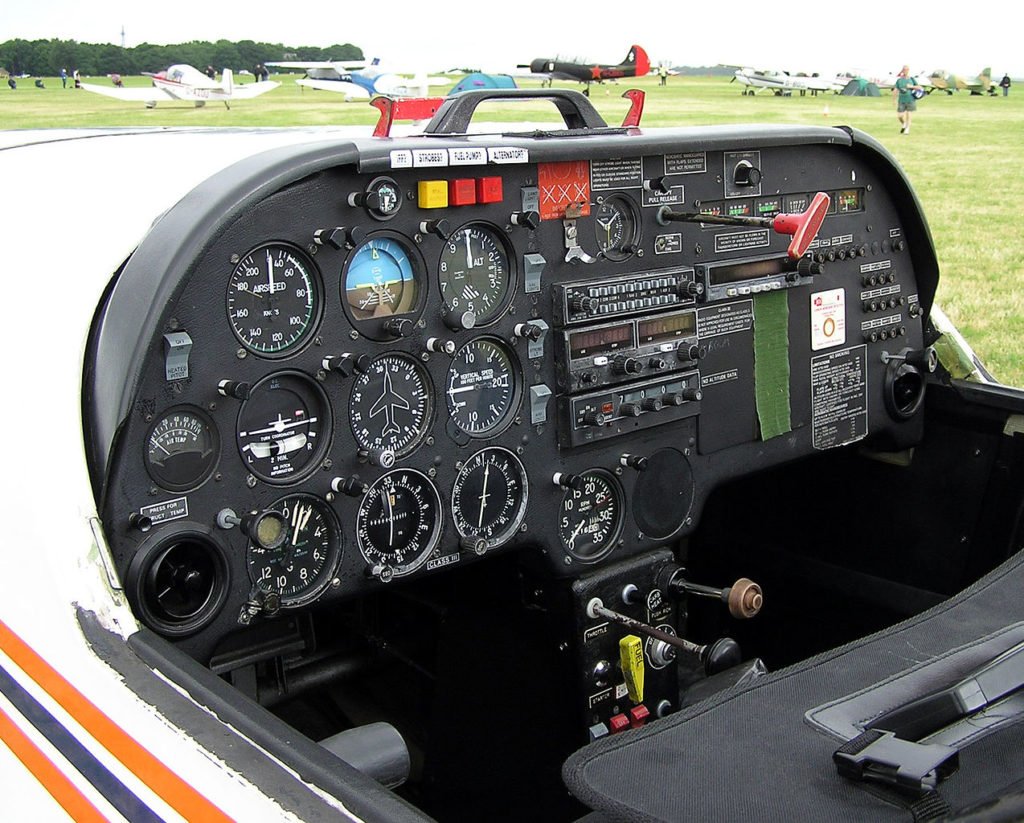
Conventional Instruments/six-pack: (Wikimedia)
The typical six-pack on an older aircraft includes six primary instruments (hence the name ‘six-pack’), including the airspeed indicator, attitude indicator, altimeter, vertical speed indicator, turn coordinator and the directional gyro (DG). In a glass cockpit, like the popular Garmin G1000, these instruments no longer exist, and the data is displayed digitally.
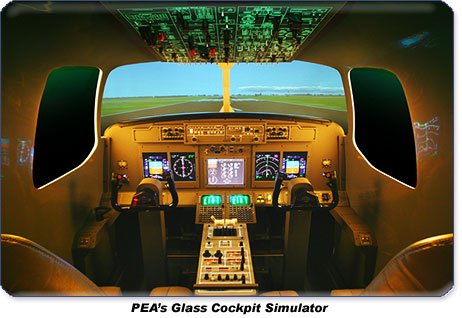
The General Aviation Manufacturers Association (GAMA) starts to define a glass cockpit by defining what they call an Integrated Flight Deck. GAMA’s definition of an integrated flight deck states: “…at a minimum, an integrated cockpit/flightdeck must include electronic display and control of all primary airplane airspeed, altitude and attitude instruments, and all essential navigation and communication functions. Integration may also include display and control of airborne surveillance, airplane systems and engine systems.”
The FAA doesn’t define the term glass cockpit, but the organization does define a “technically advanced aircraft” or TAA, as having an IFR-certified GPS or an MFD with weather, traffic or terrain information, and an autopilot.
Today’s aircraft have multiple interdependent electronic displays that work together to give the pilot all of the necessary data on one screen. These glass cockpits are meant to be more efficient for pilots, but can cause some problems if the pilot is unfamiliar with the on-board system. Problems can arise for pilots who fail to become completely familiar with the glass cockpit technology and spend too much heads-down time inside of the cockpit, figuring out the computer’s functions.
And too much heads-down time is even a problem for pilots experienced with the technology, as they can easily become overly dependent on it or fixate on its functions instead of looking out the window.
Whether you train with conventional instruments or a glass panel, you’ll need to become familiar with the avionics and navigational equipment on board the aircraft. Some student pilots prefer flying glass panel displays and are able to learn to operate them with ease. Others, especially pilots who began their flight training with conventional six-pack, still prefer the older conventional gauges to the glass display. But one thing is for sure: Most commercial and corporate aircraft will have some sort of glass panel in their aircraft, so it’s in a pilot’s best interest to become familiar with the glass cockpit as soon as possible in their flying career.