From Private Pilot to Airline Pilot: The Complete Ratings Roadmap
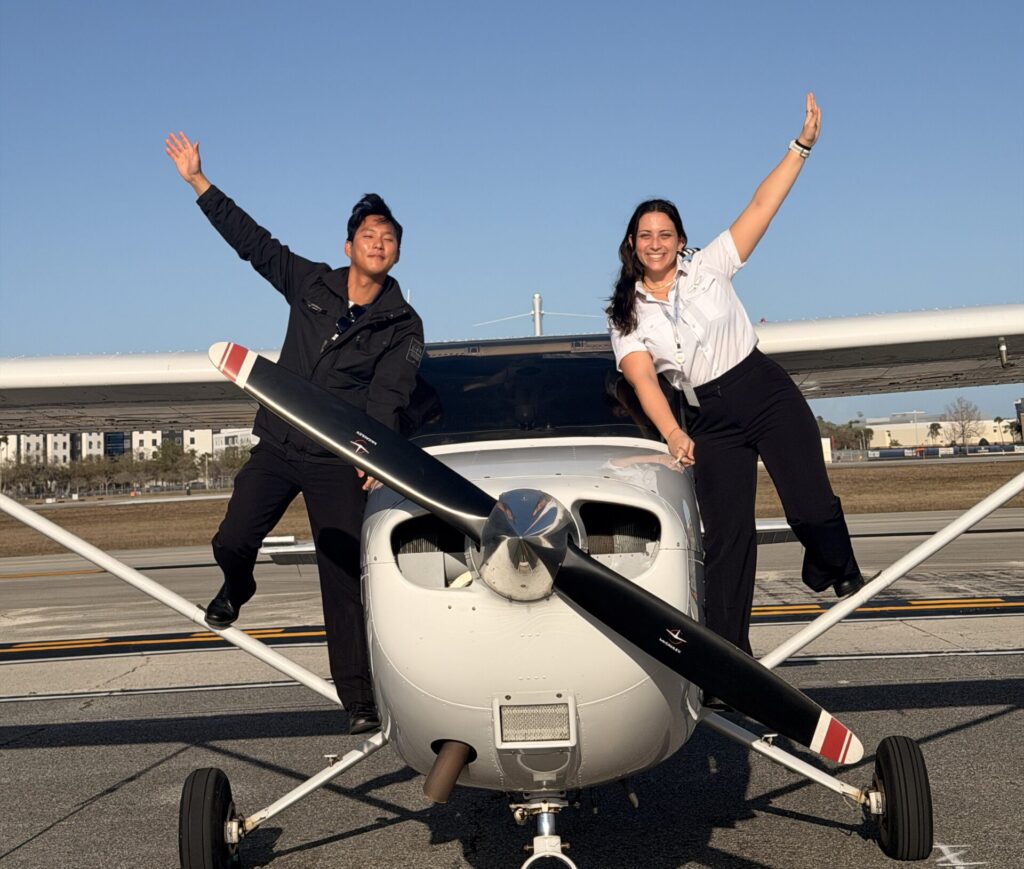
Wondering how to go from private pilot to airline pilot? On a common training path, the pilot ratings in order are Private Pilot, Instrument, Commercial, Multi-Engine, Certified Flight Instructor, Certified Flight Instructor Instrument, and Multi-Engine Instructor, followed by building the flight experience required for an airline transport pilot certificate.
Here’s what each step allows you to do, how long training typically takes at Phoenix East Aviation (PEA), and how PEA’s Professional Programs fit into the roadmap after you earn your Private Pilot Certificate.
What Ratings Do You Need to Fly for Airlines?
On this path, you’ll earn a commercial pilot certificate with an instrument rating and multi-engine privileges, then build the flight experience needed for an airline transport pilot certificate. To fly as a first officer for a Part 121 airline, you need the airline transport pilot certificate and the appropriate aircraft type rating.
Instructor ratings are not required to work for an airline, but many pilots earn them because teaching is a practical way to build flight time. In many cases, the Certified Flight Instructor rating is the most effective route to building the hours needed for airline or corporate flying.
Pilot Ratings in Order
PEA publishes both standard and accelerated timelines for its training sequence.
If you complete the steps back to back, training takes about 18 months on PEA’s standard track or roughly 12 months on the accelerated track. Individual progress still depends on factors such as proficiency, scheduling, and weather.
Pilot License Steps in Order
Wondering how to get your pilot license? Here are the steps in order.
Step 1: Private Pilot Certificate (PPL)
The Private Pilot Certificate is where your pilot certificate progression begins. It allows you to carry passengers and fly single-engine airplanes under visual flight rules during the day or at night, although you generally cannot fly for compensation or hire.
PEA’s FAA-approved Part 141 private pilot course requires a minimum of 35 hours of flight time, though many students need more than the minimum.
You’ll also complete a knowledge test and practical test, commonly called a checkride, and you’ll need to meet applicable FAA medical requirements.
Step 2: Instrument Rating (IR)
The Instrument Rating teaches you to fly using the aircraft’s instruments when outside visibility is limited by conditions such as clouds.
Phoenix East Aviation’s FAA-approved Part 141 instrument course requires a minimum of 35 hours of instrument flight training, and it doesn’t require the 50 hours of cross-country pilot-in-command time otherwise needed to earn the rating. Your training includes an instrument cross-country flight of at least 250 nautical miles, flown under instrument flight rules, with three different types of approaches.
You’ll complete another knowledge test and checkride before the rating is added to your certificate.
Step 3: Commercial Pilot Certificate (CPL)
The Commercial Pilot Certificate is the point where flying becomes a profession. It allows you to fly for compensation or hire within the privileges and limitations of the certificate.
Phoenix East Aviation’s FAA-approved Part 141 commercial course is built around reduced minimums, so you can earn your certificate and start your professional flying career sooner. Students can complete the course with a minimum of 190 total flight hours, and commercial training typically takes about 3 months on PEA’s standard track or 2.5 months on the accelerated track. You’ll also complete a knowledge test and a practical test.
To exercise commercial pilot privileges, you need at least a second-class FAA medical certificate.
Step 4: Multi-Engine Rating (ME)
Adding a multi-engine rating to your commercial pilot certificate allows you to fly aircraft such as twin-engine airplanes.
To earn the rating, you’ll train in a multi-engine airplane and complete a practical test. The time you log in multi-engine airplanes can help you meet the flight experience requirements for an airline transport pilot certificate.
Step 5: Certified Flight Instructor (CFI)
A Certified Flight Instructor rating allows you to teach students in visual flight conditions while earning income and building flight hours.
On this training path, you’ll use your commercial pilot certificate and instrument rating to meet the FAA’s flight instructor eligibility requirements. Applicants must log at least 15 hours as pilot in command in the appropriate aircraft category and class, pass the flight instructor knowledge test, and pass the Fundamentals of Instructing knowledge test unless exempt. The practical test evaluates your ability to teach and fly.
Step 6: Certified Flight Instructor Instrument (CFII)
The CFII is an add-on that allows you to teach instrument flying.
That means you can work with students earning an Instrument Rating while continuing to build your own flight time. Teaching instrument procedures also keeps those skills active as you move toward airline qualifications.
Step 7: Multi-Engine Instructor (MEI)
The MEI adds multi-engine instruction privileges to your flight instructor certificate. It also gives you a way to build multi-engine time while teaching, which can count toward the 50 hours the FAA requires in the class of airplane for the airline transport pilot rating you’re seeking.
Building Hours Toward Airline Minimums
Earning the ratings is a normal part of getting your license, but it’s not the only thing you’ll need to do. You still have to build enough flight experience for an airline transport pilot certificate.
Under FAA requirements, the standard path requires 1,500 total hours, including 500 hours of cross-country time, 100 hours at night, and 75 hours of instrument time. The minimum age for an unrestricted airline transport pilot certificate is 23.
Many pilots build those hours as flight instructors before moving into a regional airline or another professional flying position. At PEA, eligible international students enrolled in the Professional Programs can apply for an F-1 visa. International students who qualify may receive 12 months of Optional Practical Training after completing their training. With that authorization, they can work as paid flight instructors while building hours.
How PEA’s Professional Programs Cover the Roadmap
PEA’s Professional Programs are designed for students who already hold a Private Pilot Certificate, which you can also complete at PEA.
- Professional Program I includes Instrument, Commercial, Multi-Engine add-on, CFI, and CFII training – Graduates are qualified to instruct in single-engine airplanes.
- Professional Program III includes Instrument, Commercial Single-Engine, Commercial Multi-Engine, CFI, CFII, and MEI training – Graduates are qualified to instruct in both single- and multi-engine airplanes.
Pairing PEA’s Private Pilot course with Professional Program III covers every major step in the roadmap at one school, with both standard and accelerated training options available.
PEA also brings regional and national airlines, private jet operators, and cargo carriers to campus each month for presentations and open forums. Students may attend resume workshops with aviation employment resources such as JSfirm.
Another option is United Aviate. PEA students may apply after earning a commercial pilot certificate with an instrument rating, and accepted applicants receive a conditional job offer as a United First Officer while continuing through the program.
Build Your Ratings With a Clear Plan
There’s no shortcut around the ratings, flight experience, and testing required for an airline career. A structured program makes the sequence easier to understand and gives you a clearer plan for building hours after training.
Professional Programs combine the ratings needed for professional flying with instructor training and career resources. Reach out to our admissions team to learn more about the programs and get help choosing the training path that fits your goals.