Night Flying 101: What Student Pilots Need to Know Before Their First Night Flight
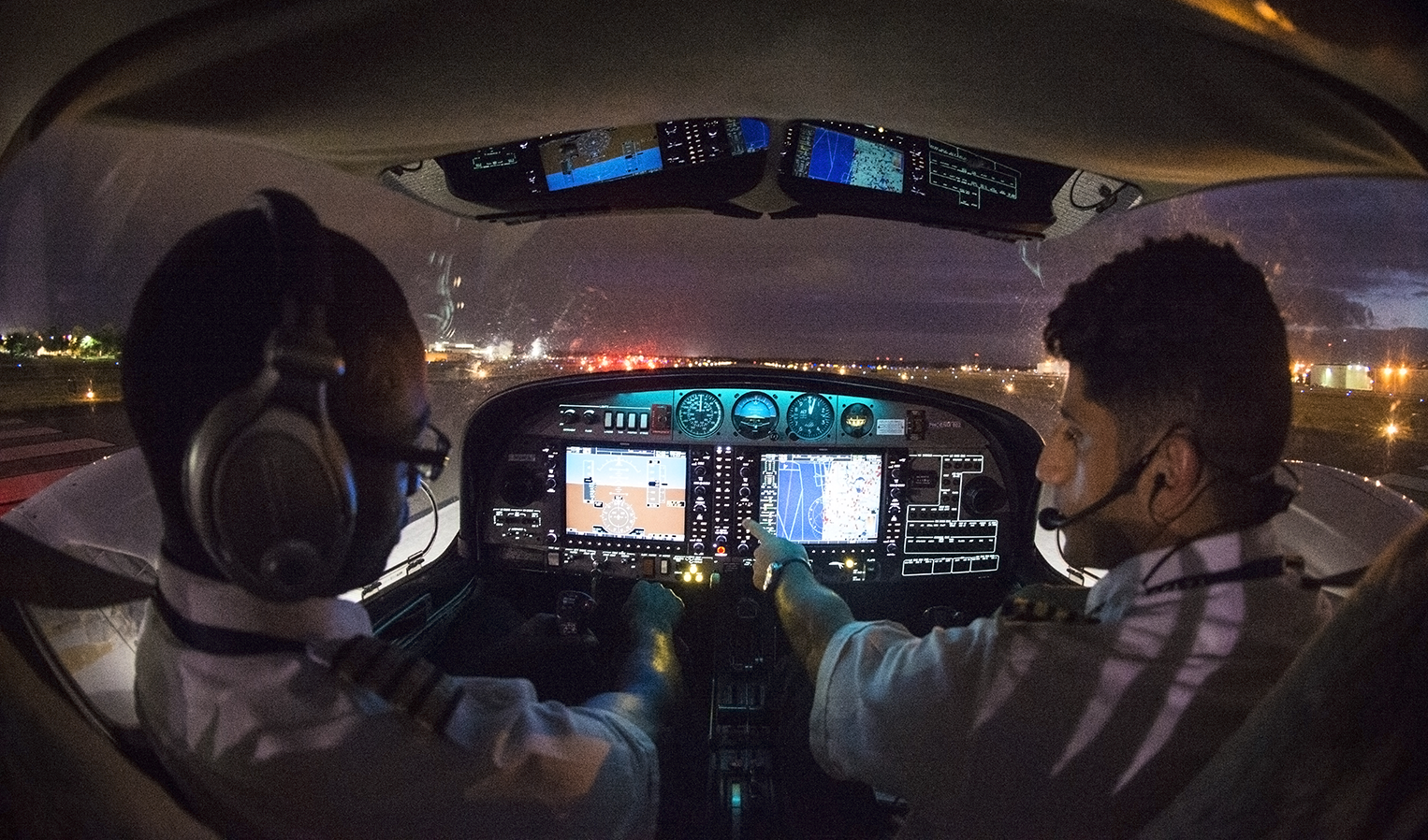
Being able to fly at night is a critical skill for any airline pilot. When you’re flying through a night sky, the airplane may feel familiar, but everything looks different. A loss of outside visual references can be disorienting, and clouds and terrain can be harder to spot. With these inherent challenges, aspiring pilots need dedicated night training as they work toward their Private Pilot License (PPL). Understanding FAA night flying rules and night flying requirements can help them prepare for their first night flight.
Why Night Flying Is Part of Private Pilot Training
The Federal Aviation Administration (FAA) requires a minimum of three hours of night flight training to earn a Private Pilot License for single-engine or multiengine airplanes. With this in mind, night training is not optional but is built into the curriculum of a typical PPL program. A private pilot certificate with an airplane single-engine rating generally allows pilots to operate qualifying single-engine aircraft during the day or at night under Visual Flight Rules (VFR), provided they meet all applicable requirements.
If you’re enrolling in a PPL program, your first student pilot night flight will likely be conducted with a certificated flight instructor. Flying with an instructor helps you learn the critical skills needed to take off, navigate, land, and scan your instruments at night.
FAA Night Flying Requirements
Under 14 CFR 61.109, aspiring pilots looking to earn a PPL for an airplane single-engine rating must complete at least three hours of night flight training. These night flying requirements include:
- One night cross-country flight of more than 100 nautical miles in total distance.
- 10 takeoffs and 10 landings to a full stop, with each landing involving flight in the traffic pattern.
Aspiring pilots should also keep in mind that, in addition to the night cross-country requirements, the FAA requires three hours of flight training on controlling and maneuvering an airplane solely by reference to instruments. This training helps pilots maintain control when outside visual cues are limited or misleading.
As mentioned above, initial night lessons are flown with an instructor. Before flying solo at night, a student must receive night training at the airport where the flight will occur, night navigation training nearby, and an endorsement for that aircraft’s make and model issued within the preceding 90 days, as required by 14 CFR 61.87.
The Three Definitions of “Night”
Another common question aspiring pilots have about FAA night flying rules is what, exactly, is considered “nighttime” flying. The answer is somewhat complicated because the FAA uses three different time periods, each tied to a different rule:
- 14 CFR 1.1: When logging night flight for training, “night” is the period between the end of evening civil twilight and the beginning of morning civil twilight.
- 14 CFR 91.209: Required position lights must be illuminated from sunset to sunrise.
- 14 CFR 61.57: To carry passengers at night, pilots generally need three takeoffs and three landings to a full stop within the preceding 90 days. In this case, the applicable period begins one hour after sunset and ends one hour before sunrise.
These definitions overlap somewhat, but they are not interchangeable. Civil twilight generally ends about 20 to 30 minutes after sunset, although the exact time varies based on the date and location.
Required Equipment for VFR Night Flight
For VFR night flight, 14 CFR 91.205(c) requires night equipment in addition to day VFR equipment. To remember the equipment needed, pilots often use the FLAPS acronym:
- F – Fuses: One spare set of fuses, or three spare fuses of each required kind, accessible to the pilot in flight if the aircraft uses fuses.
- L – Landing light: An electric landing light if the aircraft is operated for hire.
- A – Anti-collision lights: An approved aviation red or aviation white anti-collision light system, as applicable.
- P – Position lights: The required lighted position-light system.
- S – Source of electrical power: An adequate source of electrical energy for all installed electrical and radio equipment.
As part of your student pilot night flight training, your instructor will help you find and verify these items during your preflight inspection.
How Your Vision Changes After Dark
Gaining flight experience at night is a critical aspect of flying safely because pilots use their vision differently after dark. During the day, the cones of your eyes provide much of your central vision, making it possible to see detail and color.
At night, however, the rods of the eyes take over because they are more sensitive to low light. This creates a central blind spot, as the center of the retina contains cones but no rods. For this reason, pilots rely on off-center viewing, a technique that involves looking slightly to one side of a faint object rather than directly at it.
Since the eyes also need time to adapt to low-light situations (up to 30 minutes, according to FAA guidance) pilots should prepare for a night flight by:
- Dimming cockpit displays.
- Using a dim red or low-intensity white flashlight when needed.
- Avoiding unnecessary exposure to bright lights.
Night vision can also be affected by factors such as fatigue, smoking, alcohol, certain medications, and oxygen deprivation. For optimum protection, the FAA recommends supplemental oxygen for pilots on night flights above 5,000 feet.
Night Illusions and Spatial Disorientation
Flying at night also comes with a greater risk of illusions and spatial disorientation, with the “black hole approach” being among the most dangerous. This illusion can occur when an airport is surrounded by dark or featureless terrain. Without visual references, a pilot may misjudge the approach and descend below the intended glidepath.
Some other potential nighttime illusions pilots need to be aware of include:
-
- Autokinesis: Occurs when a stationary light appears to move when stared at in a dark setting.
- False horizon: Occurs when clouds, stars, or ground lights create the illusion of a horizon.
- Ground lights and stars: Ground lights may be mistaken for stars in the sky, or vice versa, making it difficult to distinguish the ground from the sky.
- Featureless terrain: Can make judging altitude challenging, as dark surfaces provide very few visual references for pilots.
How can pilots combat these illusions during night flight? The best approach is to simply get into the habit of cross-checking and trusting your instruments when visual cues are unreliable. This is a skill that all pilots should be taught as part of a PPL program.
Preparing for Your First Night Flight
Many aspiring pilots feel some anxiety ahead of their first night flight, but there are some steps you can take to feel more confident and better prepared:
- Bring two flashlights and spare batteries.
- Give yourself extra time for equipment and lighting checks.
- Review your airport lighting and taxi diagram ahead of your flight.
- Review fuel, route, and weather with your instructor.
- Give plenty of time for your eyes to adapt before your flight.
Perhaps the best thing you can do ahead of your first night flight, however, is to go into it with a sense of curiosity rather than intimidation. Your instructor has plenty of experience orienting new pilots to night flying and will help you build skills at a manageable pace.
Start Night Flight Training at Phoenix East Aviation
At Phoenix East Aviation, night flying is integrated into our Private Pilot License program, giving students the experience needed to meet FAA requirements through structured instruction and support. Our Daytona Beach location also offers access to Central Florida’s many clear evenings and generally favorable year-round flying conditions.
Get in touch to request more information about PEA’s PPL program or any of our other professional programs today. You can also get started with your application here!
Sources
https://www.ecfr.gov/current/title-14/chapter-I/subchapter-D/part-61/subpart-E/section-61.109
https://www.ecfr.gov/current/title-14/chapter-I/subchapter-D/part-61/subpart-A/section-61.57
https://www.ecfr.gov/current/title-14/chapter-I/subchapter-F/part-91/subpart-C/section-91.209
https://www.faa.gov/pilots/training/airman_education/topics_of_interest/spatial_disorientation
https://www.ecfr.gov/current/title-14/chapter-I/subchapter-D/part-61/subpart-C/section-61.87
https://www.faa.gov/air_traffic/publications/atpubs/aim_html/chap8_section_1.html
https://pea.com/courses/professional-programs/private-pilot-license/
https://pea.com/courses/professional-programs/
https://www.wificfi.com/post/night-vision-rods-cones-illusions
https://pea.com/admissions/u-s-students/#admission-form