Why Daytona Beach Is One of the Best Places in the U.S. to Train as a Pilot
Many factors can inform the ‘ideal’ flight school experience. Tuition and program length are natural priorities, as is the fleet, but location should not be treated as secondary. Overlooking where your future flight school is located could mean logging fewer flight hours or facing a less direct path into the aviation industry.
For many students, Daytona Beach is one of the best places to learn to fly in the U.S. because of four combined strengths: weather, airspace, geography, and a vibrant aviation ecosystem.
Location Is a Training Variable, Not a Footnote
Flight training requires consistency. Long or frequent gaps can weaken muscle memory and interrupt the development of airspace awareness. Instructors and aircraft availability matter, but both still depend on the outside environment. Weather, airspace, terrain, and the surrounding aviation community can all influence how steadily training progresses.
Location can ultimately determine whether your training feels smooth or stalled. Daytona Beach’s combination of favorable weather, varied airspace, accessible terrain, and an established aviation community makes location a feature of the training experience.
Year-Round Flying Weather Keeps You in the Air
Why train in Florida? For many students, the answer begins with the weather. Snow, ice, low ceilings, thunderstorms, and strong winds can all keep airplanes grounded. In northern states, winter conditions may interrupt training for days or weeks. Daytona Beach has a subtropical climate that supports over 300 days of flyable weather throughout the year, although local thunderstorms, coastal winds, and other conditions can still cause cancellations.
Sunny weather offers greater control over an otherwise unpredictable training schedule. The year-round flying weather in Florida, for example, can reduce lengthy seasonal interruptions. More consistent flying also limits gaps between lessons and makes it easier to schedule solo flights and checkrides, helping students maintain momentum toward completion.
The value of favorable weather becomes especially clear during training conducted under Visual Flight Rules (VFR). VFR conditions must meet regulatory visibility and cloud-clearance minimums; they do not necessarily require clear skies. In terms of VFR days, Florida pilot training can offer more opportunities to practice visual navigation, recognize landmarks, and maintain required separation from clouds.
One of the Busiest Training Airports in the Country
Favorable weather is important, but it means little without a suitable, bustling airport and varied airspace nearby. An extremely quiet airport may provide limited practice with air traffic control, while a congested environment can overwhelm a novice pilot. A balanced level of activity gives students opportunities to build radio skills, follow clearances, and sequence with other aircraft while continuing to focus on the fundamentals.
Florida offers many strong flight school locations, but Daytona Beach stands out because it complements favorable weather with accessible controlled airspace. PEA’s main campus is located at Daytona Beach International Airport (KDAB), a Class C airport. The Federal Aviation Administration (FAA) even publishes a pilot guide for KDAB. For flight schools based here, this setting offers practical opportunities to build foundational skills in a challenging but manageable environment.
KDAB recorded more than 330,000 aircraft operations in 2025, reflecting the airport’s high level of activity. What makes KDAB especially valuable to student pilots is its traffic mix, which includes airline, corporate, and training operations. Early exposure to air traffic control, sequencing, and professional crews builds situational awareness and radio discipline while instilling confidence in future pilots.
Diverse Airspace and Flat Terrain Built for Learning
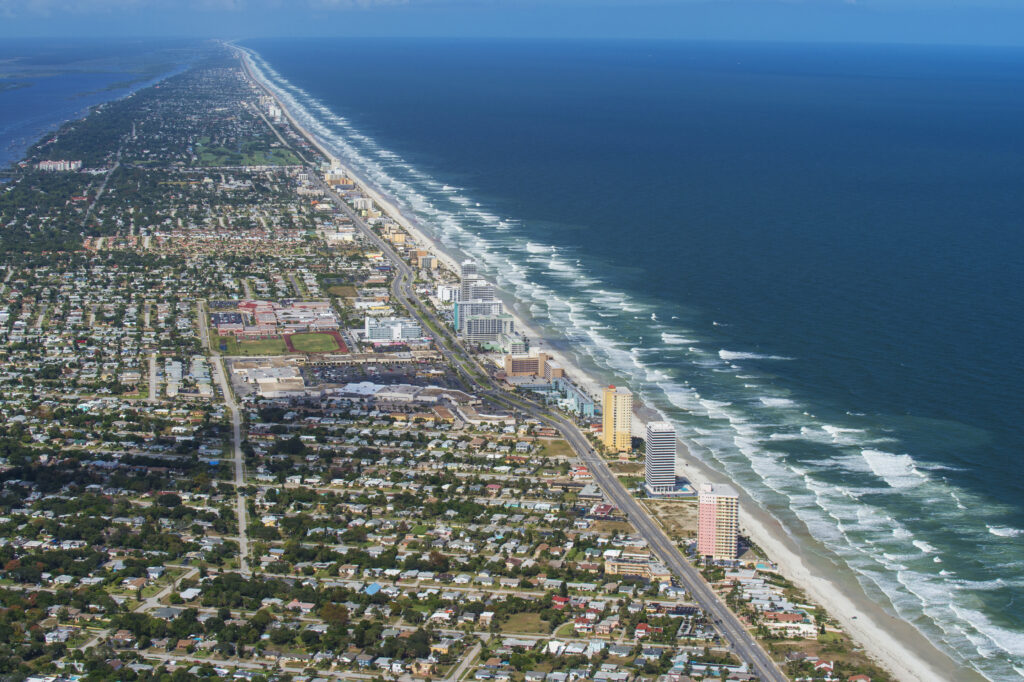
Good weather opens the door to consistent training, but geography influences the broader value of that flight time. Daytona Beach’s flat, low-elevation terrain supports practice with fundamental maneuvers, while the Atlantic coastline provides clear landmarks and exposure to sea breezes. The region’s dense airport network also gives students varied options for cross-country flight planning.
The area’s varied airspace provides exposure to many settings pilots may encounter. Students can practice at uncontrolled airports, operate in KDAB’s Class C airspace, and gain experience in the Class D airspace at nearby Ormond Beach Municipal Airport (OMN). Class B airspace near Orlando and Tampa offers additional opportunities to build airspace awareness.
These diverse settings can help students become more comfortable operating across different classes of airspace, supporting a smoother transition into increasingly complex aviation environments.
A True Aviation Ecosystem, Not Just an Airport
Daytona Beach aviation culture extends beyond the airport to include the shared knowledge and community that develop around flying. Daytona Beach is home to Embry-Riddle Aeronautical University, numerous flight schools, maintenance operations, and aviation professionals. Although these organizations are independent of PEA, their presence makes aviation part of daily life in the area.
This culture can make Daytona Beach feel like home while offering practical benefits. Students may encounter mentors and recruiters, building connections that can provide insight into regional airlines, corporate aviation, and other career paths.
With more than five decades in Daytona Beach, PEA has an established presence in the area’s aviation community. Students can benefit from structured training pathways and opportunities to connect with others in the industry.
A Lifestyle That Supports the Long Haul
Flight training is demanding, so where you live can affect whether the experience feels sustainable. Daytona Beach offers warm weather and many ways to unwind. Its 23 miles of shoreline give students room to relax outdoors during time away from training.
Daytona Beach also offers a range of housing and lifestyle options for students. Apartments near the airport and local flight schools may help keep commutes manageable, leaving more time for studying, training, and rest. Students should still compare current housing costs and availability before relocating.
For international students, moving to an established and diverse aviation town can make the transition easier. At PEA’s Daytona Beach campus, eligible international students can receive school-related documentation and guidance for F-1 and M-1 visa applications, although visa decisions remain with the U.S. government.
Find Your Ideal Launchpad With PEA in Daytona Beach
As you prepare for the next stage in your aviation journey, think carefully about your flight school Florida location. Weather matters, but so do the terrain, Class C airport environment, diverse regional airspace, aviation community, and daily lifestyle. Together, these factors make location a strategic training advantage rather than a matter of convenience.
Across these factors, Daytona Beach delivers a strong training environment. Phoenix East Aviation (PEA) has been part of the Daytona Beach aviation community since 1972. Explore PEA’s Daytona Beach campus to learn more about its weather, airspace, geography, and aviation ecosystem. When you’re ready to take the next step, contact us and request information about PEA’s Professional Programs.
Sources
https://www.flydaytonafirst.com/about-dab/historical-information.stml
https://www.meetingsmags.com/southeast/full-speed-ahead-in-daytona-beach/
https://newsdaytonabeach.com/stories/daytona-beach-airport-reports-traffic-spike-in-2025,150115
https://www.faa.gov/flight_deck/dab
https://www.bls.gov/ooh/transportation-and-material-moving/airline-and-commercial-pilots.htm
https://www.faa.gov/air_traffic/publications/atpubs/pham_html/chap16_section_2.html
https://www.aopa.org/destinations/airports/KDAB/details
https://roadgenius.com/statistics/airports/usa/daytona-beach-dab-airport/