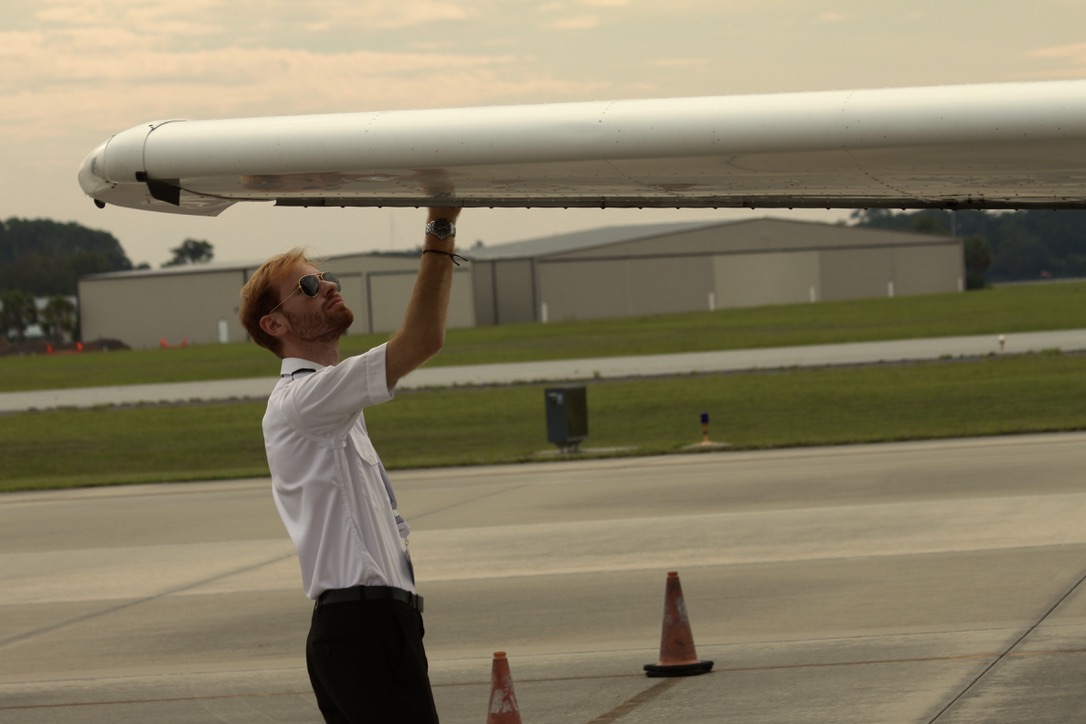
How to Use OPT After Flight School: A Guide for International Pilot Students
F-1 optional practical training (OPT) is the federal work authorization that allows F-1 flight school graduates to remain in the United States, work as paid certified flight instructors (CFIs), and build the flight hours needed for future airline careers. If you are approaching graduation or have recently completed your flight training, understanding how OPT works is essential to making the most of this opportunity.
This guide explains F-1 optional practical training eligibility requirements, the application process, and how to use your 12-month authorization strategically to gain experience and reach airline hiring minimums. It also covers important planning considerations for when your OPT period ends.
What Is Optional Practical Training?
F-1 optional practical training (OPT) is a temporary employment authorization granted by U.S. Citizenship and Immigration Services (USCIS) that allows eligible F-1 visa students to work in the United States in a position directly related to their field of study. Most F-1 students can receive up to 12 months of OPT authorization after completing their academic program, making it one of the most valuable benefits available to international graduates.
For pilot training graduates, employment as a certified flight instructor (CFI) generally qualifies because it is directly connected to the aviation training and certifications earned during flight school. Importantly, OPT is not a separate visa category. Instead, it is a benefit of an existing F-1 student’s status, and no employer sponsorship is required to participate.
OPT can be used before graduation (pre-completion OPT) or after graduation (post-completion OPT). For most aspiring professional pilots, post-completion OPT is the critical phase because it allows full-time paid flight instruction while building flight hours toward airline hiring minimums.
Who Is Eligible for OPT After Flight School?
Eligibility for optional practical training begins with F-1 student status. While many international pilot students assume they will qualify for OPT after graduation, not all flight training programs are tied to the F-1 visa. At Phoenix East Aviation, only students enrolled in Professional Programs are eligible for F-1 status and the OPT benefit that comes with it. Students training under M-1 vocational student status are not eligible for OPT after completing their program. To qualify, students must also maintain valid F-1 status throughout their training and meet all school and immigration requirements.
Another important rule involves curricular practical training (CPT). Students who accumulate 12 months or more of full-time CPT lose eligibility for OPT, making careful planning essential.
Visa classification directly affects post-graduation work options for international students, which is why it’s important to choose the right program and visa path from the start. Throughout training, international students should work closely with a designated school official (DSO) to maintain compliance and preserve OPT eligibility.
How to Apply for OPT
When applying for optional practical training, timing is critical. You can submit your OPT application as early as 90 days before your program end date and no later than 60 days after graduation. Missing this filing window generally means losing your opportunity to receive OPT authorization.
The first step in the application process is meeting with your DSO, who will provide you with a recommendation and a Form I-20 endorsement before helping you update your records in the Student and Exchange Visitor Information System (SEVIS). Once your records are current, your DSO will help you submit a USCIS Form I-765, the supporting documents, and the required filing fee.
If USCIS approves your application, you will receive an employment authorization document (EAD) card. You may not begin working until you have received the physical EAD card and the authorized start date listed on the card has arrived.
Since USCIS processing can take several months, apply as soon as the 90-day window opens. If you plan to travel internationally while your application is pending, consult your DSO before making arrangements to ensure your travel plans do not interfere with your application process or F-1 visa status.
Using OPT as a Flight Instructor
For most international pilot graduates, working as a paid certified flight instructor (CFI) is the most practical and effective way to use post-completion OPT. Flight instruction is directly related to aviation training, and it qualifies as OPT employment while allowing you to continue building valuable flight experience.
This opportunity is especially important because most graduates complete flight training with approximately 200 to 300 total flight hours. However, the FAA generally requires 1,500 flight hours to qualify for an Airline Transport Pilot certificate. This leaves a substantial gap to close before becoming eligible for many airline positions.
As an active instructor at a busy flight school, it is common to log 60 to 100 flight hours per month. Over a 12-month OPT period, hours quickly accumulate as the experience accelerates progress toward airline hiring minimums.
It’s important to note that maintaining a valid OPT status requires at least 20 hours of work per week. Additionally, maintaining accurate records of employment history and hours worked is vital. Since the sequencing of training and employment matters, it is also essential to earn all FAA certificates (including your CFI certificate) before completing your flight training program; obtaining those credentials afterward would complicate OPT eligibility and employment plans.
What Happens When OPT Ends?
International pilot graduates must understand that OPT is a temporary opportunity, not a permanent immigration solution. Unlike graduates in certain science, technology, engineering, and mathematics fields, pilots generally do not qualify for the 24-month STEM OPT extension.
When your OPT authorization expires, your F-1 visa work authorization also comes to an end. At that point, unless you have secured another valid immigration status, you must either transition to a different visa category or depart the United States.
For international pilots looking to remain in the United States longer, one possible pathway is an H-1B work visa, which requires employer sponsorship and eligibility for a qualifying position. Another option is to return to your home country or another international market and pursue airline opportunities that value FAA training, certifications, and flight experience gained in the United States.
Whether you identify another pathway to remain in the United States or plan to transition out of the country, the key is to plan early. Career, immigration, and job-search decisions should begin during your OPT period so that you have a clear next step in place before your authorization expires.
The F-1 OPT Advantage at PEA
For international students planning a professional pilot career, access to F-1 status and OPT can be a major advantage. Phoenix East Aviation is one of only four flight schools in the United States authorized to offer both F-1 and M-1 student visa programs, giving students the ability to choose a training pathway that includes eligibility for post-graduation OPT.
PEA’s Professional Pilot Programs are specifically structured to prepare students for instructor positions immediately after training. Graduates complete the certificates and ratings required to teach as professional flight instructors, including Certified Flight Instructor and Certified Flight Instructor Instrument. Students enrolled in Professional Program III also earn the Multi-Engine Instructor certificate, expanding their instructional opportunities and experience-building potential.
With all these qualifications completed before graduation, eligible F-1 students emerge well-positioned to apply for OPT as soon as they finish training. Once authorized, they can transition directly into paid flight instruction and begin accumulating the flight hours needed for future airline careers.
OPT With PEA: The International Pilot’s Path to Building Hours and Launching an Airline Career
Optional practical training is one of the most powerful career-building tools available to international pilot students. With the right planning, you can remain in the United States, work as a paid flight instructor, and build valuable flight time after graduation. The key is to approach OPT strategically from the start:
- Enroll in an F-1 eligible program.
- Maintain your F-1 status.
- Secure post-completion OPT authorization.
- Use your 12-month work period to gain experience and move closer to airline hiring minimums.
- Begin planning early for what comes after OPT is complete.
To learn more about F-1 eligibility, our Professional Programs, and opportunities for international students, visit PEA’s International Student Admissions page to take the next step toward your professional pilot career.
Sources
https://pea.com/blog/f-1-m-1-visa-for-international-students-pilot-training/
https://www.faa.gov/pilots/training/atp
https://pea.com/admissions/international-students/
https://pea.com/courses/professional-programs/
https://www.ice.gov/sevis/practical-training
https://studyinthestates.dhs.gov/students/prepare/students-and-the-form-i-20