Do You Need a College Degree to Become a Commercial Airline Pilot?
Ready for your dreams to take flight? If you’re envisioning a career as a commercial airline pilot, you might be wondering: “Do you need a degree to be a pilot?”
The simple answer to this question is no; the Federal Aviation Administration (FAA) does not currently require a college degree at any certification level. However, the detailed answer is a bit more complex, so if you’re considering becoming an airline pilot, read on to learn more about specific FAA requirements and what today’s major airlines are actually looking for.
What the FAA Actually Requires
Although there are no formal degree requirements to earn a private pilot certificate, commercial pilot certificate, or Airline Transport Pilot certificate, the FAA does have some strict requirements in place for aspiring pilots.
To become a pilot for a Part 121 (commercial) carrier, you’ll need to obtain a First-Class Medical Certificate from an FAA-authorized aviation medical examiner to prove that you meet certain physical standards to fly.
From there, you’ll need to log a minimum of 250 flight hours (although most airlines will require more before hiring you). You’ll also need to pass checkrides and written knowledge exams to gradually earn your private pilot certificate, instrument rating (IR), and commercial pilot certificate. Typically, experience and flight hours are earned through a reputable training program.
If you want to become a first officer at a Part 121 airline, you’ll need to earn an Airline Transport Pilot certificate or Restricted Airline Transport Pilot certificate, which requires a minimum of 1,500 hours of quality flight time, passage of an FAA written exam, and completion of a final checkride.
How Major Airlines Approach Degree Requirements
Many major legacy airlines once required or preferred a bachelor’s degree for airline pilots, but this is no longer the case. As the supply of commercial pilots has struggled to keep up with demand, many commercial airlines have dropped this requirement (or preference) in favor of prioritizing pilots with proven flight experience and FAA credentials.
For reference, here’s a list of several major commercial airlines and each corresponding airline pilot college degree requirement:
- Delta Air Lines – No degree required as of January 2022, when its four-year degree requirement for first officers was formally dropped.
- Southwest Airlines – No college degree required — just a high school diploma or GED.
- United Airlines – No college degree required, but highly preferred as a qualification.
- FedEx – This carrier has historically maintained stricter requirements, especially for direct-hire roles. Still, a college degree is not a formal requirement to become a commercial FedEx pilot — though it may be preferred.
With fewer airlines listing a college degree as a hard requirement, it has become increasingly possible to pilot without a degree, as long as you have the right training and experience. Still, because many airlines list a four-year degree as a “preferred” qualification, this can serve as a differentiator in a competitive job market.
The Restricted Airline Transport Pilot Certificate: Where a Degree Does Provide a Tangible Advantage
As you can probably imagine, there are situations where having a college degree can provide a real advantage over those with experience, cockpit training, and certification alone. This especially comes into play when earning a Restricted Airline Transport Pilot certificate, which allows qualified pilots to act as first officers for Part 121 carriers with fewer than the standard 1,500 flight hours.
In August 2013, the FAA officially mandated that all Part 121 commercial first officers hold this certificate, which typically requires up to 1,500 hours of flight experience depending on qualifications.
So, how is a college degree relevant? To qualify for a Restricted Airline Transport Pilot certificate without the standard 1,500 flight-hour requirement, pilots need to either have military experience or an aviation degree. The flight hour requirements to qualify for Restricted Airline Transport Pilot certification are as follows:
- Standard (no college degree or military experience) – 1,500 hours
- Associate degree from a qualifying institution – 1,250 hours
- Bachelor’s degree from a qualifying institution – 1,000 hours
- Proven military flight experience – 750 hours
Having an aviation degree vs. flight training alone can benefit pilots looking to obtain their Restricted Airline Transport Pilot certifications — provided that certain conditions are met. For example, degrees must come from an FAA-approved school, typically operating under Part 141 regulations. Part 141 flight schools follow a structured curriculum with standardized training milestones, and students must complete both their academic coursework and flight training at the same institution to remain eligible for the reduced hour requirements.
Of course, there are potential trade-offs. A bachelor’s degree could save you from needing to accumulate 500 flight hours in pursuit of your Restricted Airline Transport Pilot certification; however, pilots may be able to close that same 500-hour gap in about six months or less, which is often faster than the time that would be spent earning a degree. With this in mind, it’s important to weigh the potential benefits and trade-offs before making a decision between a formal aviation degree vs. flight training.
What Airlines Are Actually Looking For
If a college degree isn’t typically required to become a commercial airline pilot, what are airlines actually looking for when they recruit a new hire? Here are a few factors that matter most:
- Your certificates and ratings. Core certificates, such as your Private Pilot Certificate, Commercial Pilot Certificate, Airline Transport Pilot certificate, and similar designations, carry a great deal of weight while demonstrating professional progression.
- Total flight hours and quality experience. Airlines want to see not only your total flight hours but also the quality of your experience. You should have practice flying in diverse and challenging conditions.
- Your FAA record. A clean FAA record is non-negotiable, and any violations or incidents will be heavily scrutinized during the screening process.
- Professional conduct and communication. Employers want to hire professional pilots who interview well, communicate clearly, and are trustworthy.
- Airline pipeline programs and pathway connections. Today, pipeline programs and pathway connections between airlines and flight schools act as a bridge between the classroom and the cockpit. Being part of one of these partnerships can be an excellent way to differentiate yourself from the competition.
Flight Training vs. Aviation Degree Programs
So, is a formal aviation degree or an aviation training program better for you? As you consider your options, there are a few things worth keeping in mind.
For starters, consider the traditional degree path. In general, earning a degree consists of at least four years of formal coursework, which the Education Data Initiative estimates costs around $38,270 per year. For a four-year degree, this adds up to more than $150,000. On the other hand, having a bachelor’s degree from an approved program could fast-track your ability to earn your Restricted Airline Transport Pilot certification and make you a more competitive candidate in today’s job market.
What if you opt for professional flight training in lieu of a college degree? These programs are typically designed to be completed in about 12–18 months at a significantly lower cost than a formal degree program. This means you may be able to enjoy faster entry into regional airlines and begin building seniority (and flight hours) sooner rather than later.
Another option to consider is completing an online or part-time aviation degree while you fly for a regional carrier. This option allows you to start building practical experience in the cockpit as you work toward a formal degree. Keep in mind that many airlines accept degrees in any field (meaning you can study something other than aviation, if you’d like).
Airline Pathway Programs: Closing the Gap
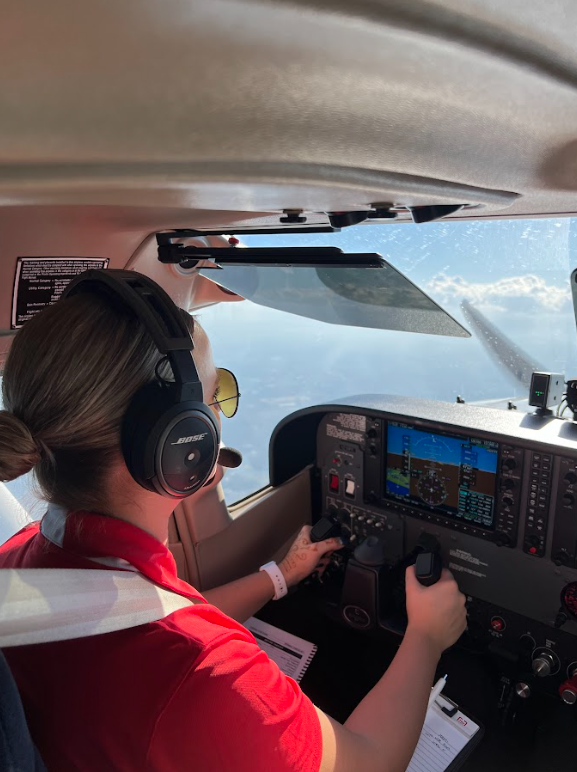
Today, many airlines have formed partnerships directly with flight training programs, providing aspiring pilots with a structured path toward employment. These pathway programs have become an excellent way for airlines to fill hiring gaps with qualified talent while making a career in aviation more accessible to those without a college degree.
Phoenix East Aviation (PEA) is proud to take part in United Airlines’ Aviate program, which gives students a unique opportunity to secure a route to employment with this major commercial carrier as soon as they earn their PPL. This, in addition to monthly airline visits, open forums with recruiters, and other exciting events and networking opportunities, empowers students to engage directly with recruiters across the aviation industry while setting the stage for future career growth.
Students at PEA also enjoy the ability to participate in regular resume workshops in collaboration with firms specializing in aviation job resources, such as JSFirm.
Your Path to the Airlines Starts Here
A college degree is no longer a formal requirement under the FAA, and most major airlines don’t mandate one. And while a degree can carry some weight, the fastest path to a career in the skies is often high-quality flight training, structured career development, and the right professional connections.
At PEA, we’re proud to have more than five decades of experience as a distinguished and nationally accredited flight school. Get in touch to learn more about what sets our training programs apart, including our dedicated career pathways that position students for professional success.
Sources
https://pea.com/courses/professional-programs/
https://pea.com/career-pathways/
https://careers.southwestair.com/pilots
https://educationdata.org/average-cost-of-college
https://careers.fedex.com/career-areas/pilot/
https://careers.united.com/us/en/first-officer
https://www.delta.com/us/en/careers/pilots/hiring-faqs
https://www.faa.gov/pilots/training/atp