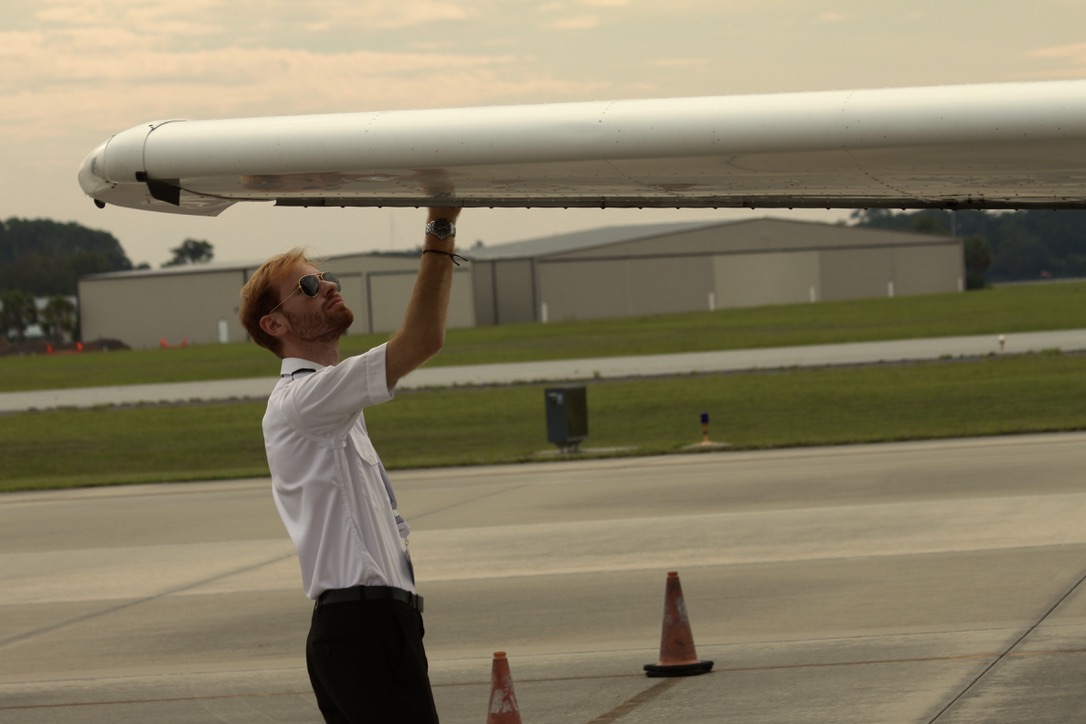
Multi-Engine Course for Pilots
As the saying goes, “the sky is not the limit—it’s only the beginning.” This idea resonates deeply with every student who steps through the doors at Phoenix East Aviation. It’s a reminder that in aviation, the opportunities truly are as wide as the sky. Every student shares the same goal: to become a pilot. Earning a Private Pilot Certificate is the first major milestone, opening the door to the world of flight, while progressing toward a multi-engine rating represents a key achievement on the path to a fulfilling career in aviation.
Multi-Engine Rating Requirements
The multi-engine rating is an additional certification on top of a Private or Commercial Pilot Certificate, which allows pilots to operate an aircraft with more than one engine. While adding this rating to an already existing certificate is optional, it is an essential prerequisite for those aspiring to advance their careers to the realm of flying for a commercial airline. The requirements for obtaining this rating are similar to those already met during the process of obtaining Private or Commercial certificates.
However, the path to obtaining a multi-engine rating requires no formal written exam, but pilots must show their knowledge through the completion of a checkride. During checkrides, pilots must demonstrate the ability to handle engine failures, while multi-engine flights closely resemble single-engine flights upon normal conditions. Examiners heavily focus on emergency scenarios, such as testing the pilot’s understanding of reduced power settings, feathered propellers, and complete engine shutdowns. Instrument-rated pilots must also be able to demonstrate their proficiency in precision approaches under both single and multi-engine configurations.
Accelerated Multi-Engine Training
Phoenix East Aviation offers a streamlined and professionally rigorous accelerated multi-engine training pathway for Part 141 Professional Pilot Programs. These programs compress the traditional training timeline without compromising quality or curriculum integrity; for example, pilots pursuing the multi-engine rating may complete this segment in approximately one month on the accelerated track versus about six weeks on the standard schedule, and the content and instruction remain consistent regardless of pace. PEA supports this accelerated learning structure through a streamlined Part 141 training model and utilization of reliable, versatile  aircraft such as the Piper PA-34 Seneca, which has been modernized to enhance safety and performance in multi-engine instruction. For pilots eager to fast-track their certification and flight-instructor credentials while maintaining high standards of training, Phoenix East Aviation’s accelerated multi-engine program delivers both efficiency and high standards for excellence.
Multi-Engine Course Tips
Mastery of a multi-engine aircraft begins with strong proficiency in single-engine operations before advancing to a complex aircraft. Comprehensive ground study provides the foundation for success in conjunction with essential flight time. At Phoenix East Aviation, flight instructors guide students throughout the training, offering clarification and expertise to ensure thorough understanding. It is important for students to maintain open communication within this learning environment, as this supports student confidence and facilitates the achievement of the multi-engine rating.
If you are ready to have your pilot dreams take flight, contact Phoenix East Aviation at info2@pea.com to get in touch with their esteemed Admissions Department, which is here to help!